

Summary
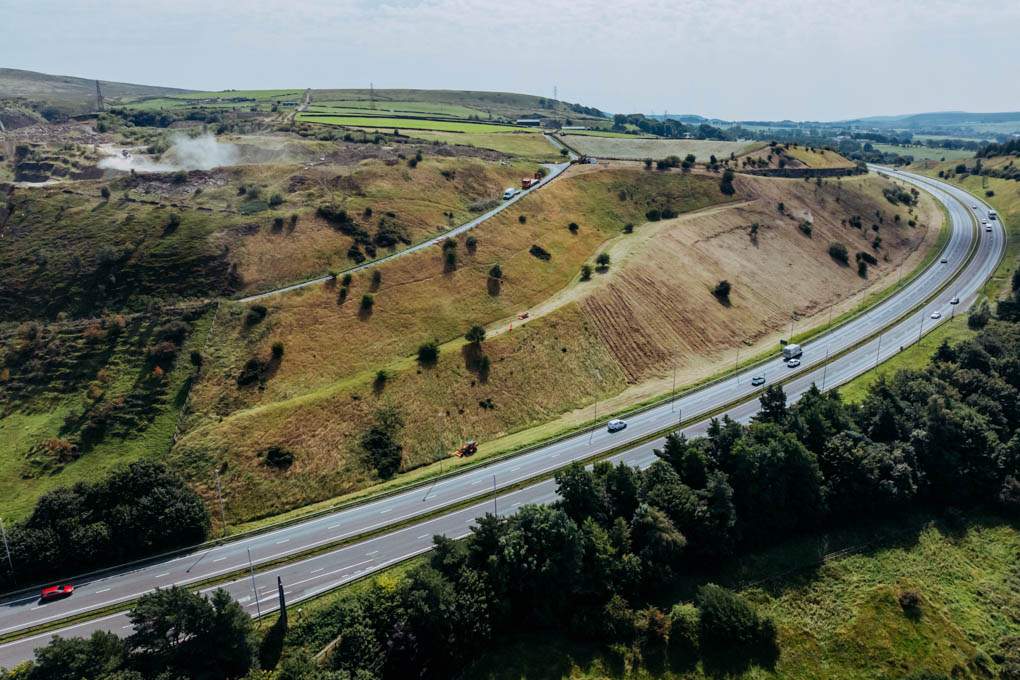
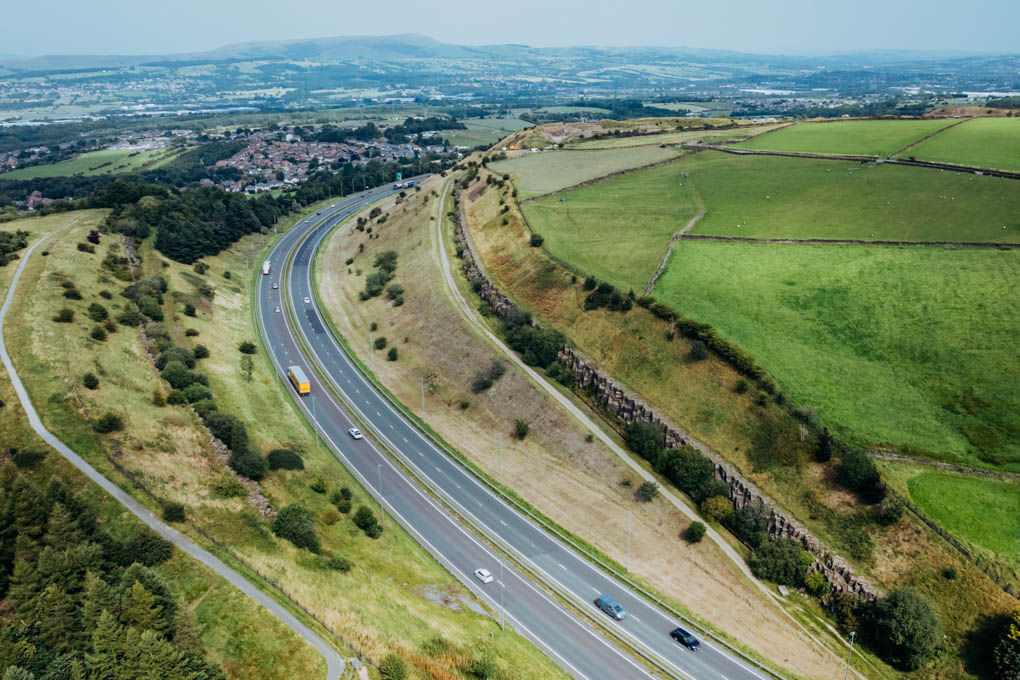
The Species Rich Grassland Project A56/M65, branded as Networks for Nature, was originally constructed in 2023. This Environmental Designated Funds Biodiversity Scheme, under the Environment and Wellbeing Road Investment Strategy 2 (RIS 2), was delivered for the client, National Highways, in partnership with the Lancashire Wildlife Trust.
- Location: 38 sites along the A56 and M65, covering 29.99 hectares in total
- Duration: 3 years of annual cut and collect following initial wildflower seeding (2023 – 2026)
- Goal: To achieve Biodiversity Net Gain (BNG) units by turning poor-condition neutral grassland sites into higher-value lowland meadow habitat
Works & Scope
The scheme was the largest delivered by National Highways in operations at the time of construction, producing 120.05 BNG Units (over 100 meant this was a nationally important scheme).
Scope of Works:
- Liaise with all contractors to develop a programme of works.
- Groundwork Preparation (Year 1 Intervention):
- Groundwork preparation of all sites, including the removal of any self-seeded Ash (Fraxinus excelsior) tree species.
- Existing grassland cut to 5 cm and arisings removed from sites, creating 50% bare soil.
- Plots are seeded with the appropriate wildflower seed mix.
- Establishment & Maintenance (Subsequent Years):
- Annual cut and collect of the wildflower, using a ride-on cut and collect mower where possible.
- Litter picking.
- Rake up all arisings and move to designated safe locations.
- Identification of suitable locations to store cuttings outside of the meadow.
- Meetings: Attend meetings on and off-site, including buildability, pre-start, progress, and lesson-learned meetings.
Watch the Video
Click the video below to see this case study in action and gain additional insight into the project.
Outcomes & Sustainability
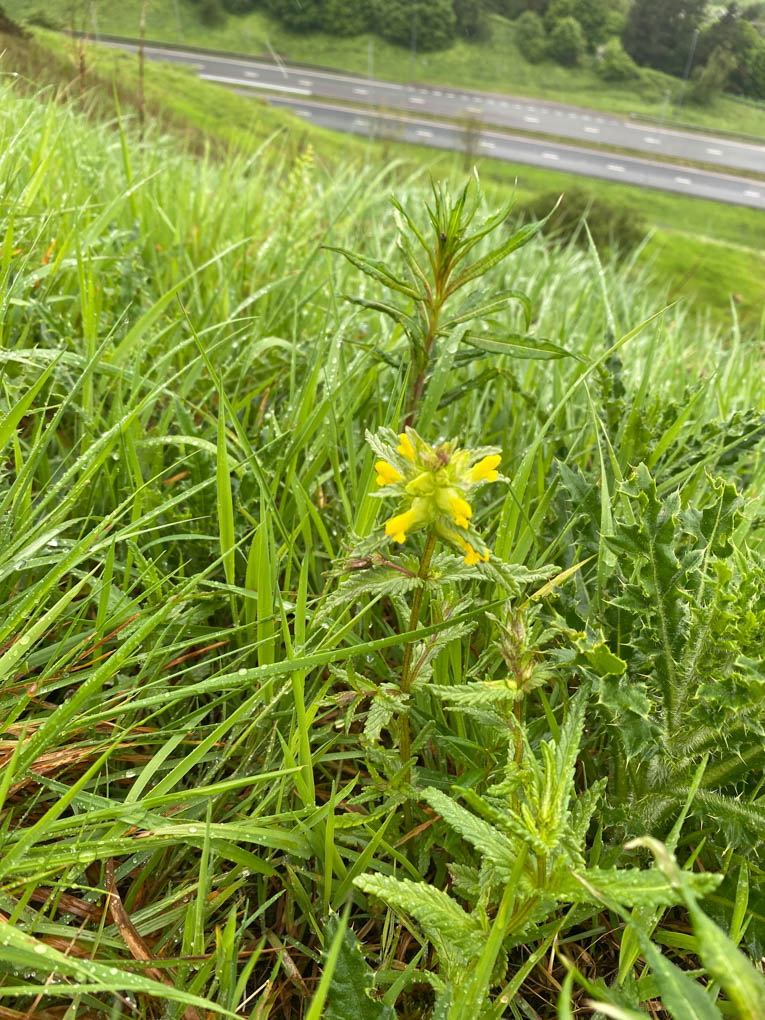
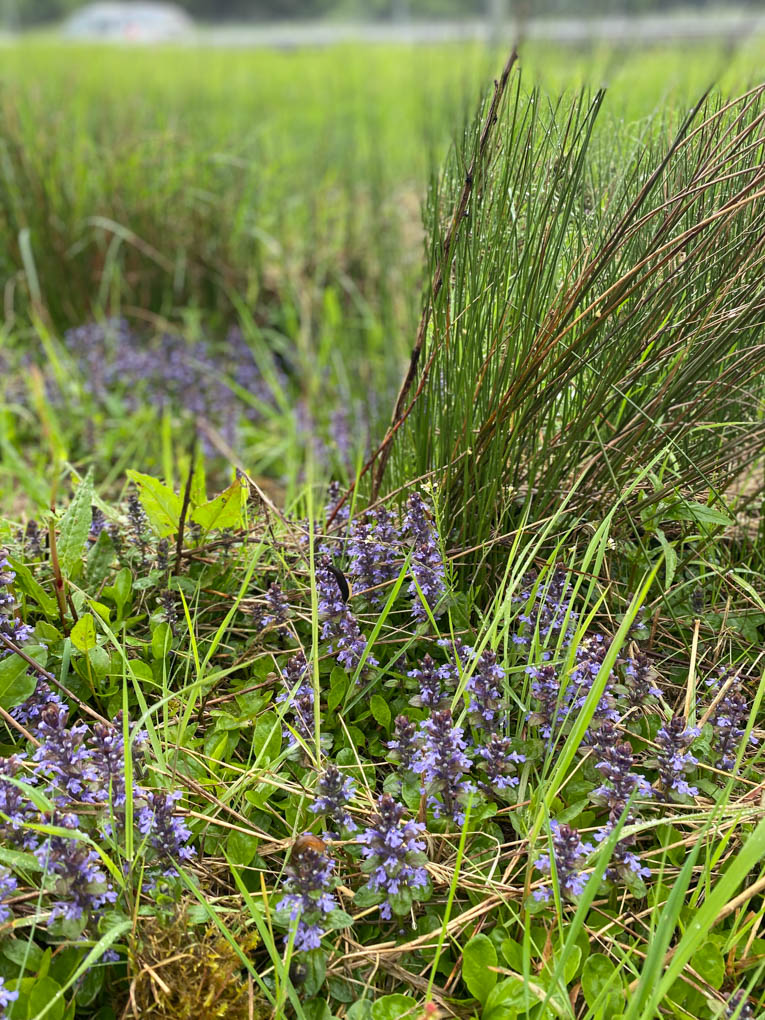
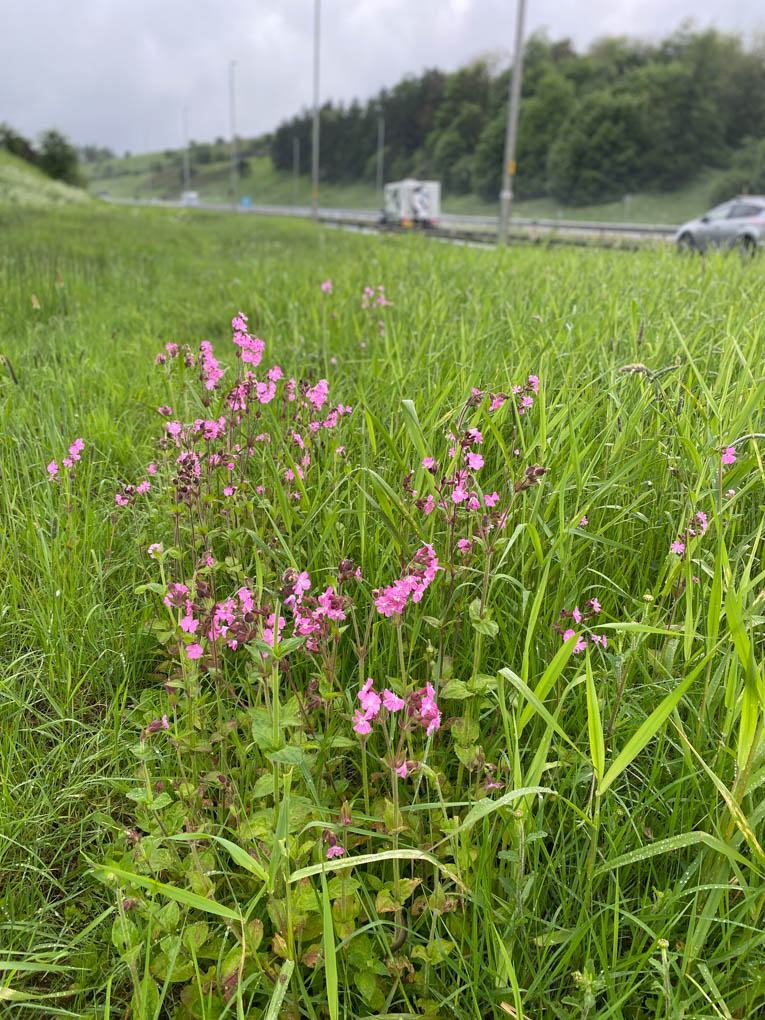
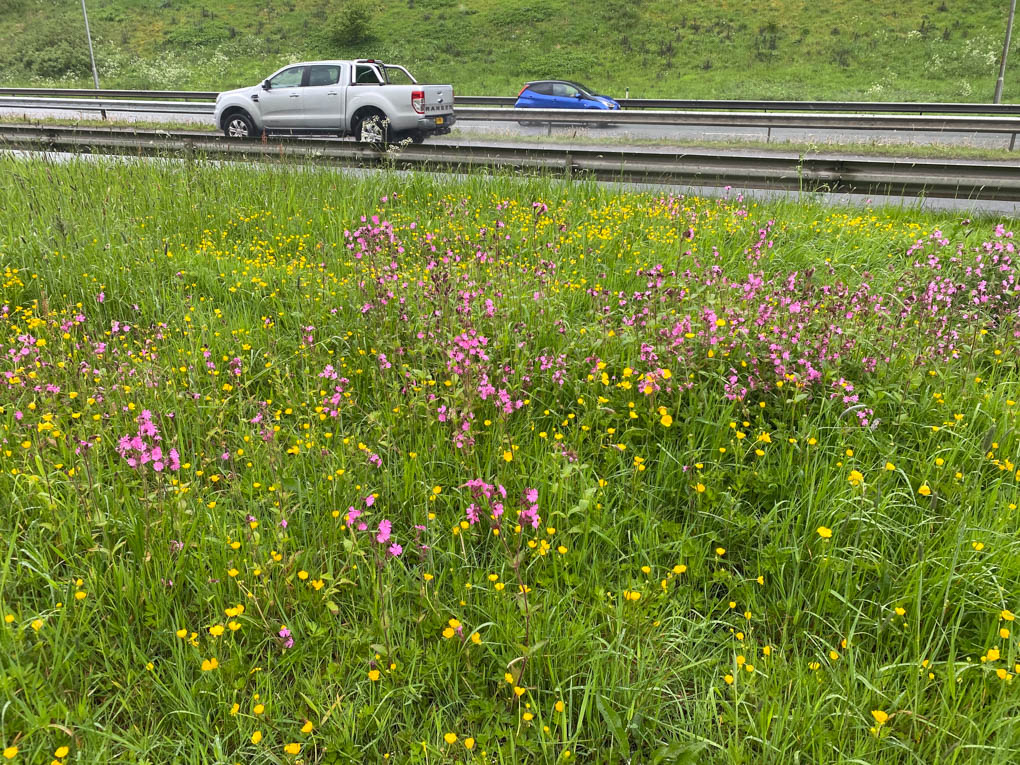
The project created 120.05 BNG units and significantly improved habitats.
- Biodiversity Net Gain: Achieved through the improved diversity of grassland and the creation of higher-value lowland meadow.
- Habitat Improvement: Improvement of neutral grassland from poor to good condition for:
- 18 sites along the M65.
- 20 sites along the A56.
- Species Discovery: Botany surveys found desirable species like cuckoo flower, tiny vetch, and cowslip.
- Future Growth: 2026/27 (Year 3) is expected to see even more species, as some seeds take two years to flower (e.g., oxeye daisies).
- Benefits: The sites create vital habitat for pollinators and small mammals.
Challenges
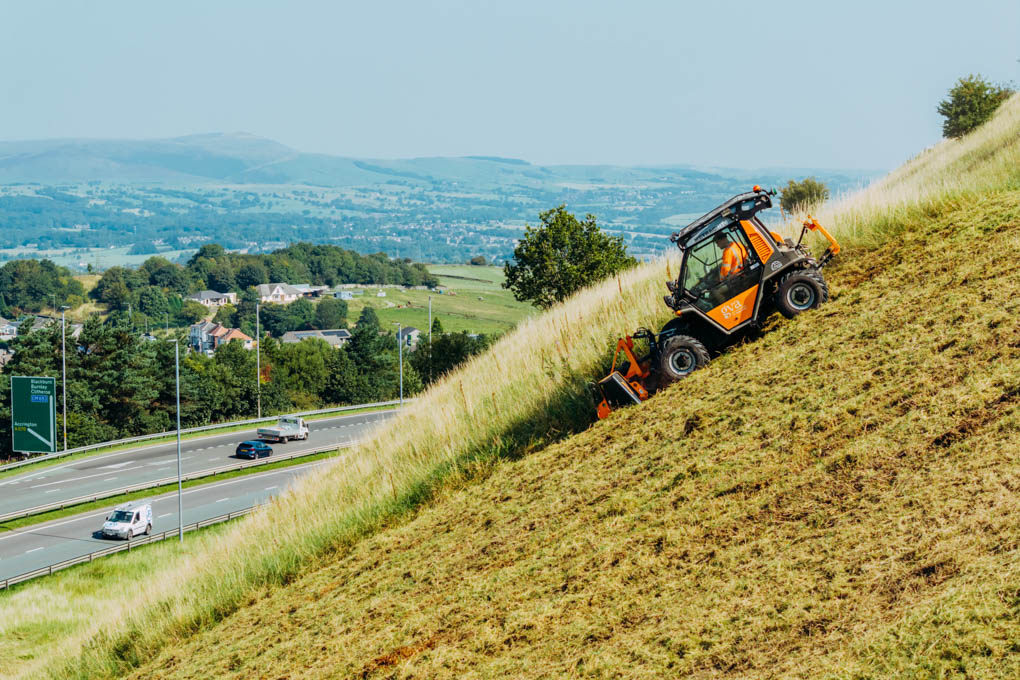
- Ground Conditions: Poor ground conditions and steep banking meant early identification of challenges for machinery, necessitating specialist applications.
- Access & Traffic: Sites along the busy A56/M65 posed challenges in terms of access and the number of road lane closures needed.
- Safety Risk: The biggest safety risk identified was slips, trips, and falls on the steep banks.
Approach and Solution
- Surveys: Thorough ground surveys were carried out to identify all hazards.
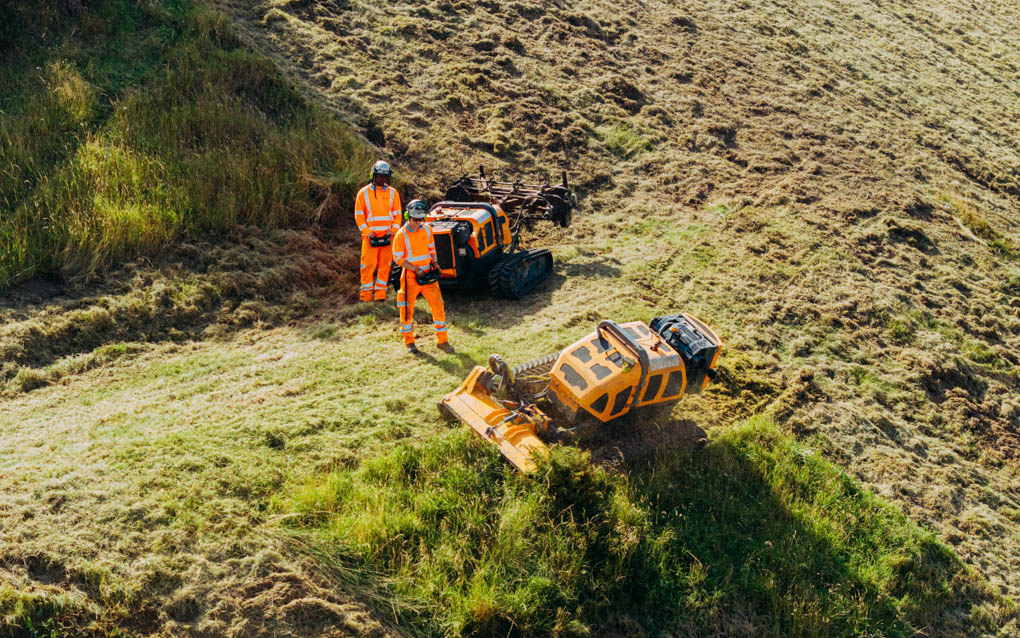
- Specialist Equipment: Use of remotely operated mowers and alpine tractors successfully utilised to overcome ground conditions.
- Safety & Efficiency: Use of the GVA’s specialist fleet, including the only Unimog Cut and Collect in the country (minimises spread of invasive plants and harm to insects) and a fleet of robot mowers.
- One robot cuts, one rakes the cuttings into windrows, enabling operatives to stay in a safe position whilst working on the banks.
- Road User Focus:
- Worked offline (off-network) wherever possible to minimise road lane closures and traffic management (TM).
- Failing that, works were planned at night on lane closures to still keep the road open.
- Worked collaboratively with all partners and traffic management to minimise disruption and risk to the network.
- Safety Result: National Highways’ number one imperative is safety, and the scheme achieved zero incidents related to slips, trips, and falls.
Insight
“We were prepared to assess access afresh each year, and this approach stood us in good stead. From year 1 to 2, we identified inefficiencies in the traffic management configuration and implemented changes to continue to safeguard traffic flow and safety most effectively.”
Edward Tiplady – Contracts Manager, GVA
Environmental & Social Contribution
- Biodiversity Enhancement: The project has significantly improved the ecological value of 38 sites across 27.99 hectares, creating a connected network of species-rich lowland meadow habitats that support pollinators, small mammals, and a diverse range of flora.
- Sustainability Focus: Use of specialist machinery such as the Unimog cut and collect system and robotic mowers, minimised disturbance to sensitive habitats and reduced carbon emissions compared to conventional methods.
- Safety and Accessibility: Extensive ground surveys and adaptive traffic management strategies ensured safe working conditions for operatives while maintaining safe, disruption-minimised access for road users.
- Knowledge Sharing: The collaborative approach between GVA, Lancaster Wildlife Trust, National Highways, and contractors fostered continuous learning and innovation, informing improvements in biodiversity management and operational practices for future schemes.




Client quote
“The GVA team always demonstrate their understanding of the complexities of traffic management and how flexible access is essential for safeguarding network customers’ rights to safe, disruption-free travel, wherever possible.”
Betty Wilson – Project Manager, National Highways