

Summary
Rye Hill Balancing Reservoir — Brocklesby Pond Restoration & Drainage Improvement
- Client: National Highways
- Main Contractor: Galliford Try
- Location: A180 Barnetby–Brocklesby, Lincolnshire
- Duration: August 2024 – February 2025
- Services: Pond desiling, vegetation clearance, civils, drainage renewal, landscaping
Overview
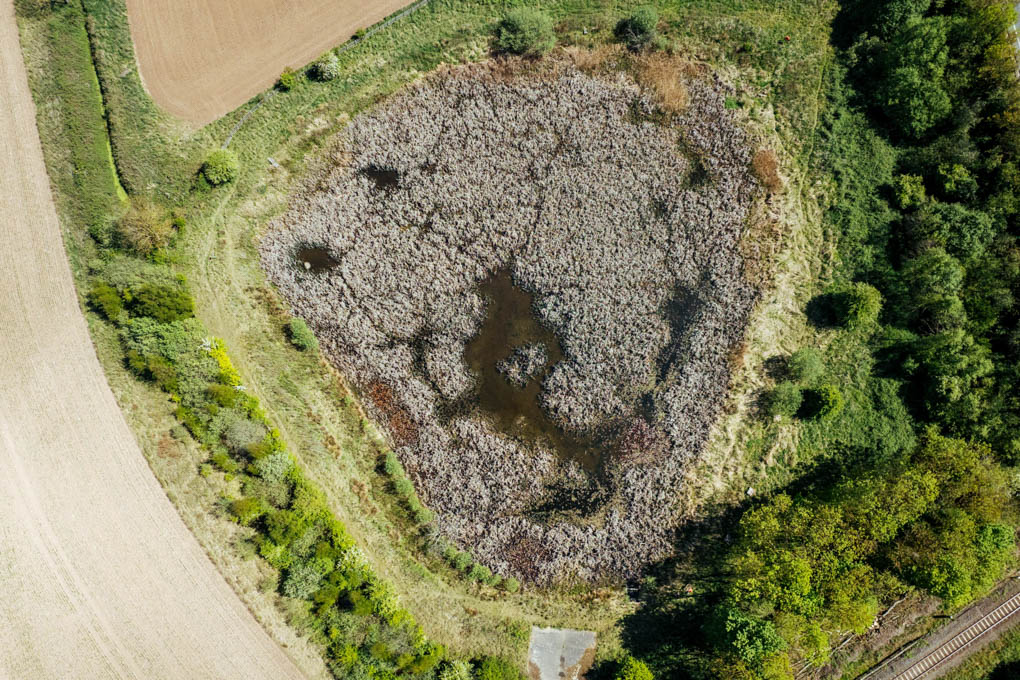
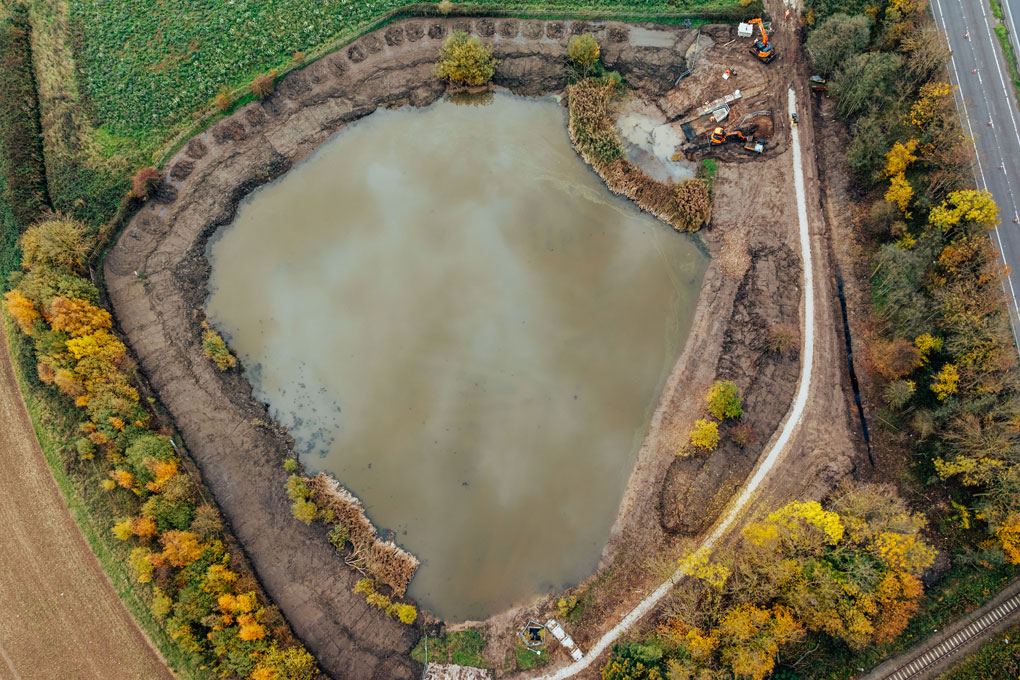
The Rye Hill Balancing Reservoir, located on the westbound carriageway of the A180, has been in service since 1983. After nearly four decades with limited maintenance, the pond had become heavily silted and overgrown with reeds, significantly reducing its capacity to manage surface water runoff from the motorway. Located within a designated Flood Zone 2 area and within a known flood hotspot that had experienced flooding events as recently as 2017, restoring the pond to full working capacity was a matter of highway safety.
National Highways, working through main contractor Galliford Try, appointed GVA to carry out a full programme of pond cleansing, vegetation management, drainage renewal, and civil engineering works to bring the reservoir back to a safe and functional standard.



The Challenge
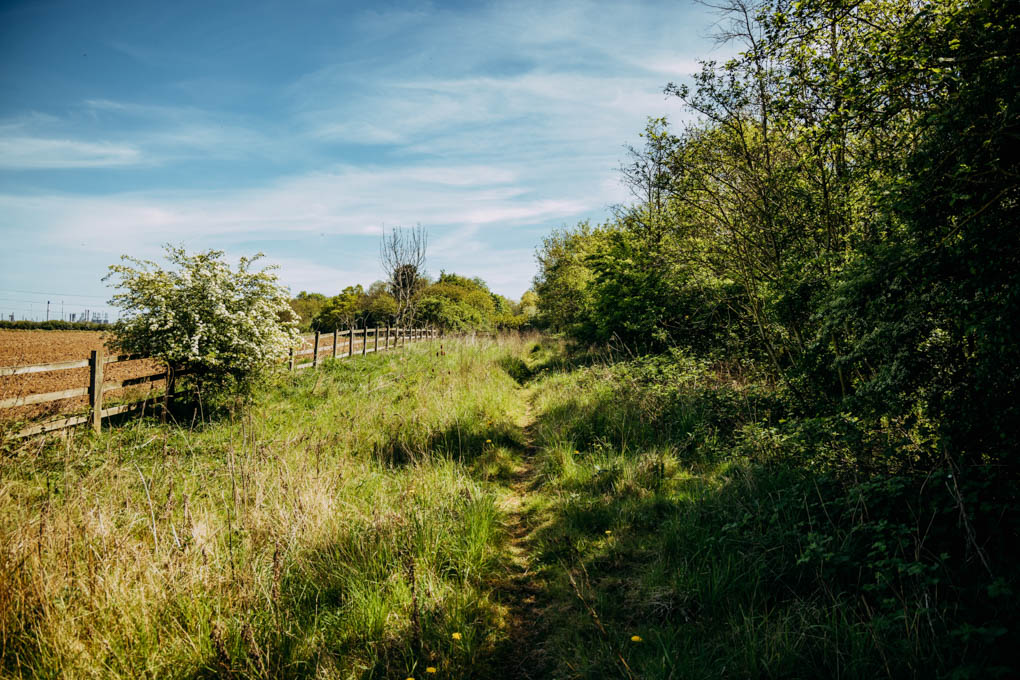
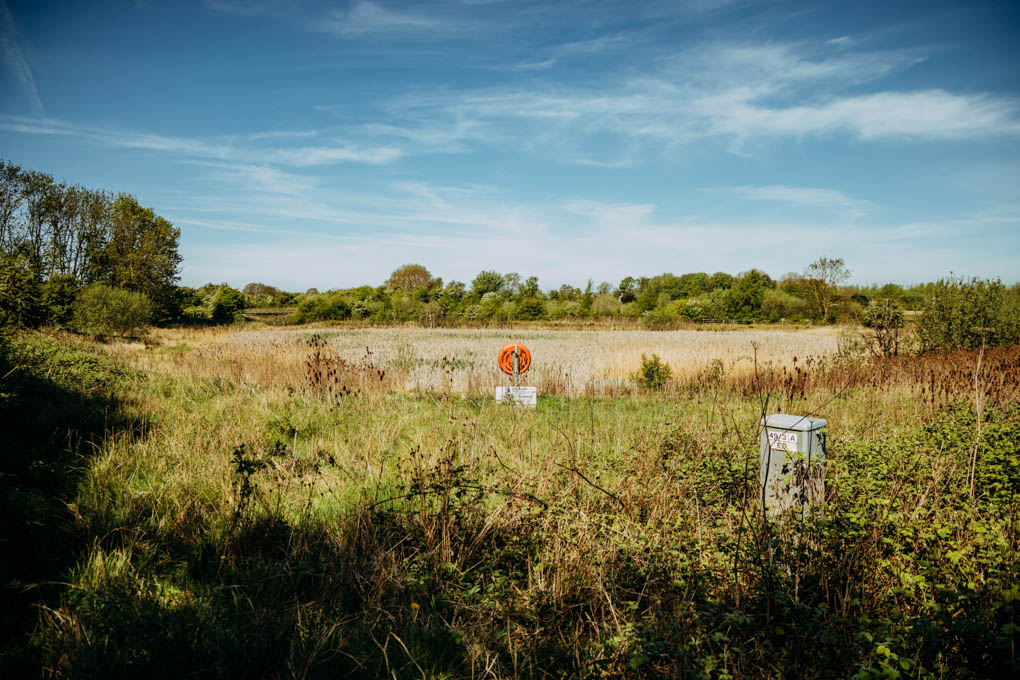
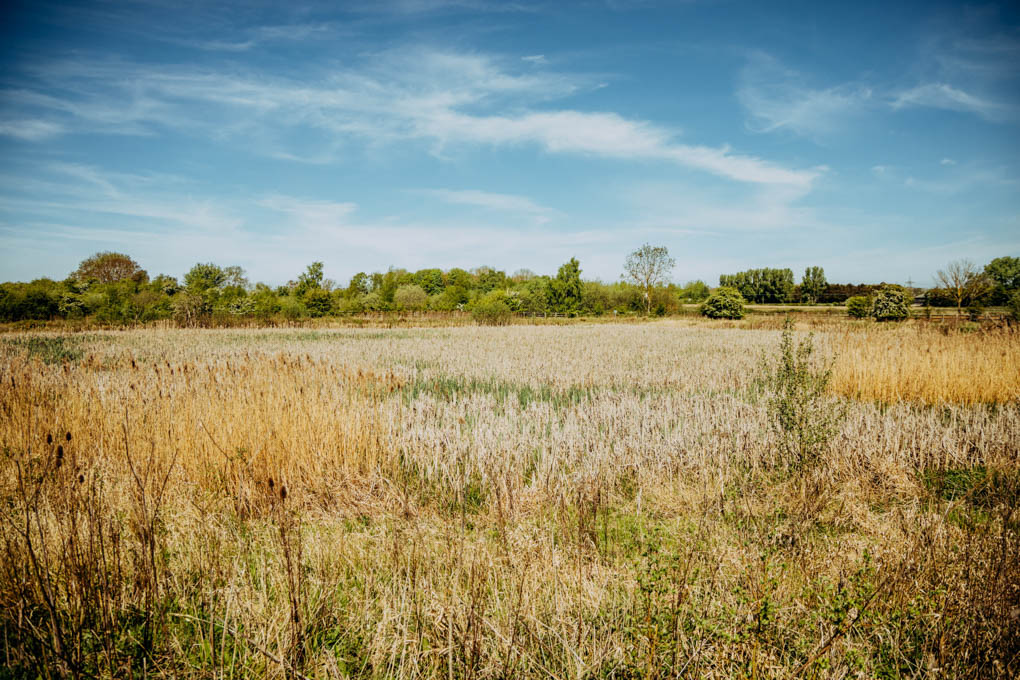
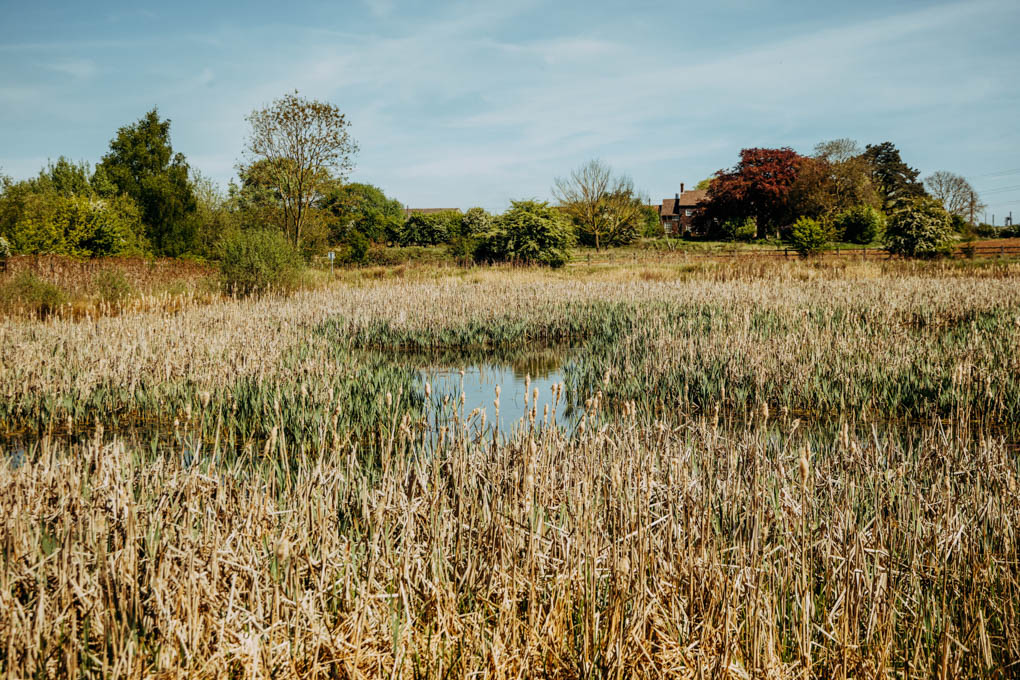
When GVA arrived on site, the Rye Hill Balancing Reservoir was heavily vegetated and surrounded by dense tree growth. Decades of silting had reduced the pond’s ability to attenuate the surface water flowing in from the A180 and its surrounding catchment. A damaged pipeline running beneath the motorway had also compromised the free flow of water between the eastbound drainage ditch and the main pond — further restricting the system’s capacity.
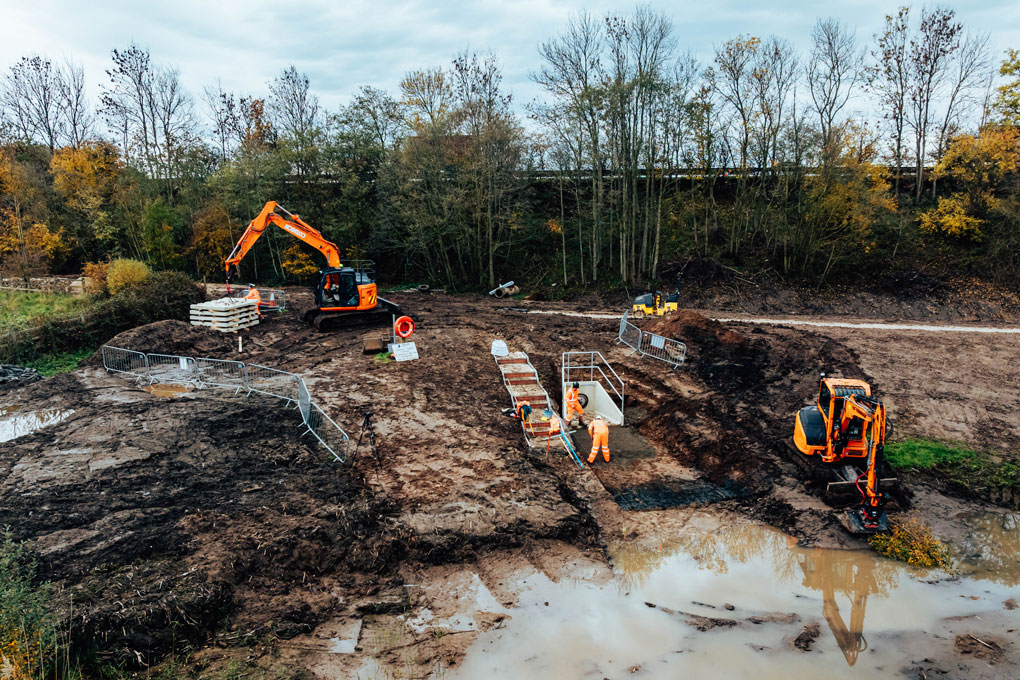
The works required careful planning and flexible execution. The site sits adjacent to a live motorway, making safety an absolute priority throughout. As the project progressed into autumn, increasingly wet and cold conditions made groundworks significantly more challenging — particularly any works involving concrete. The team had to continually adapt their programme, choosing which tasks to undertake based on the weather on any given day rather than following a fixed sequence.

Our Approach
GVA deployed a carefully selected combination of specialist plant and equipment to suit the demanding conditions:
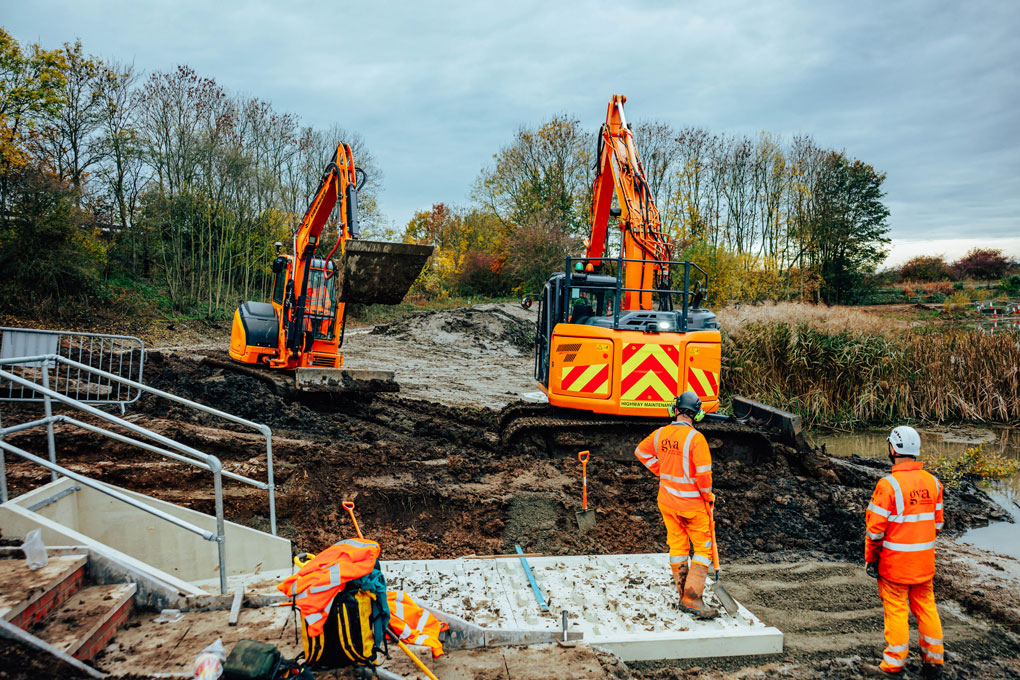
Amphibious excavator — Selected as the most appropriate machine for the size and nature of the pond, allowing the team to work directly in and around the water without the need for dewatering.
Long-reach excavator — Used in combination with the amphibious machine to reach across the pond and deposit excavated silt into position, reducing double-handling.
360° tracked dumper — Chosen over wheeled alternatives to minimise ground disturbance on the saturated site, with its spinning capability allowing efficient tipping without compounding already difficult conditions underfoot.
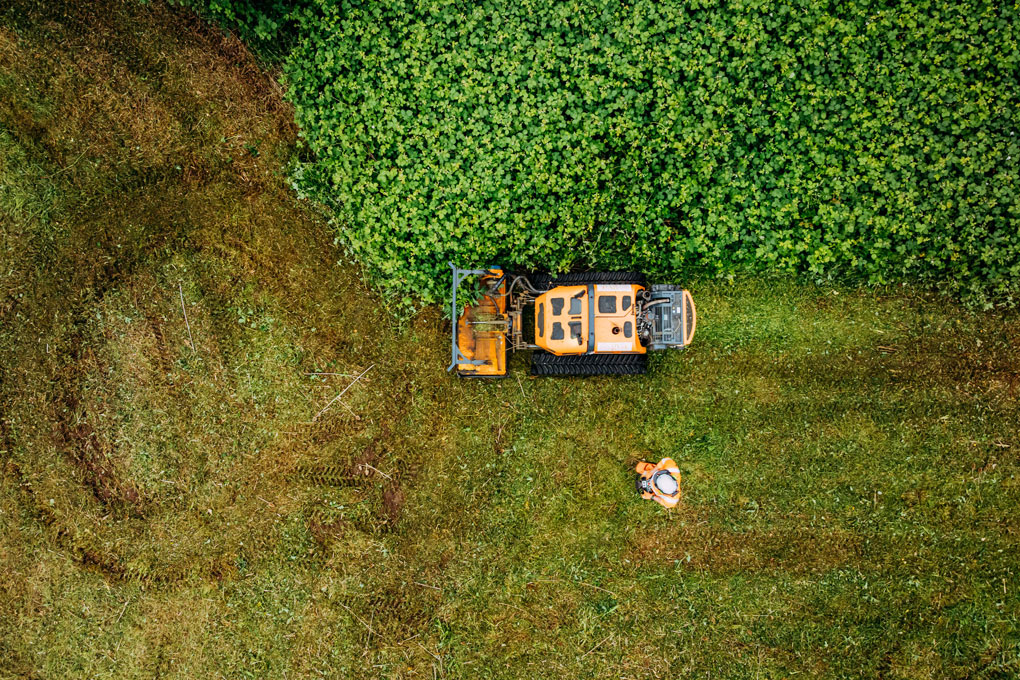
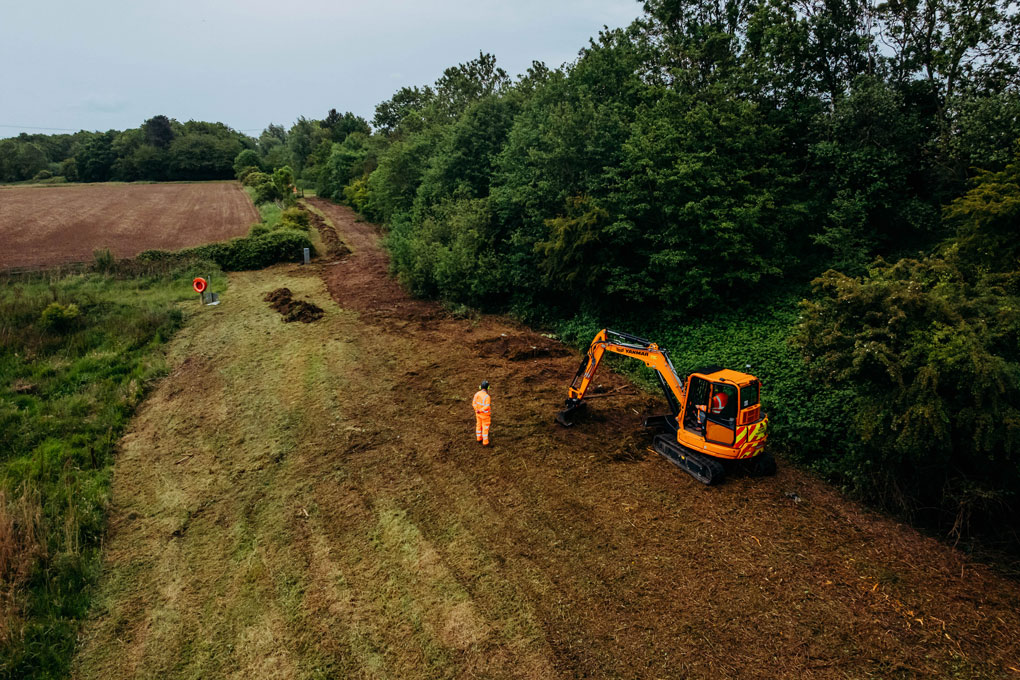

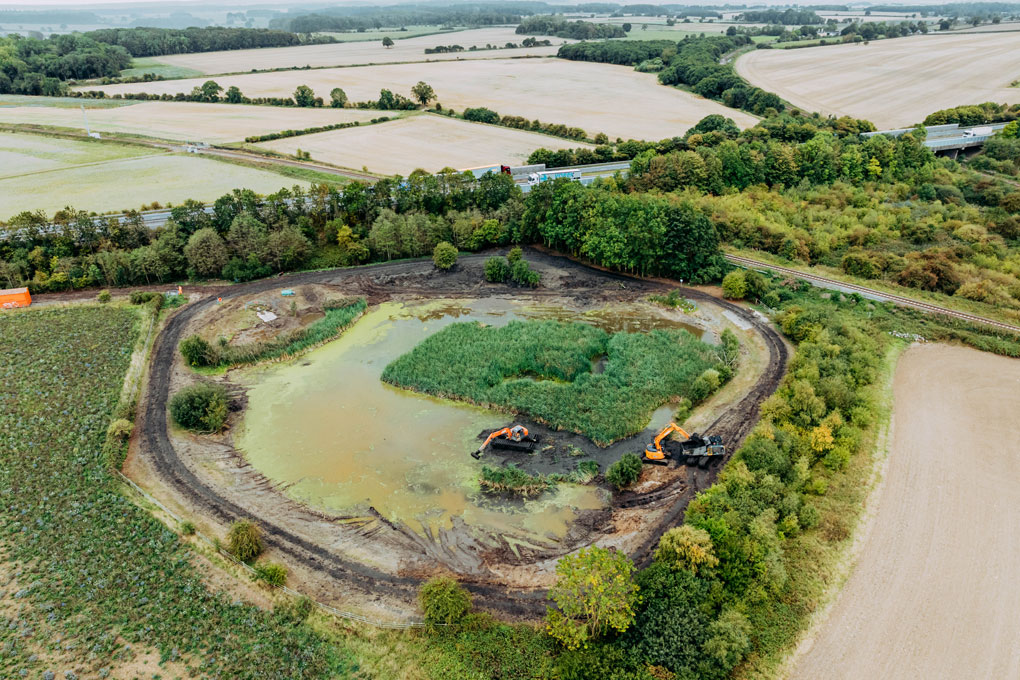


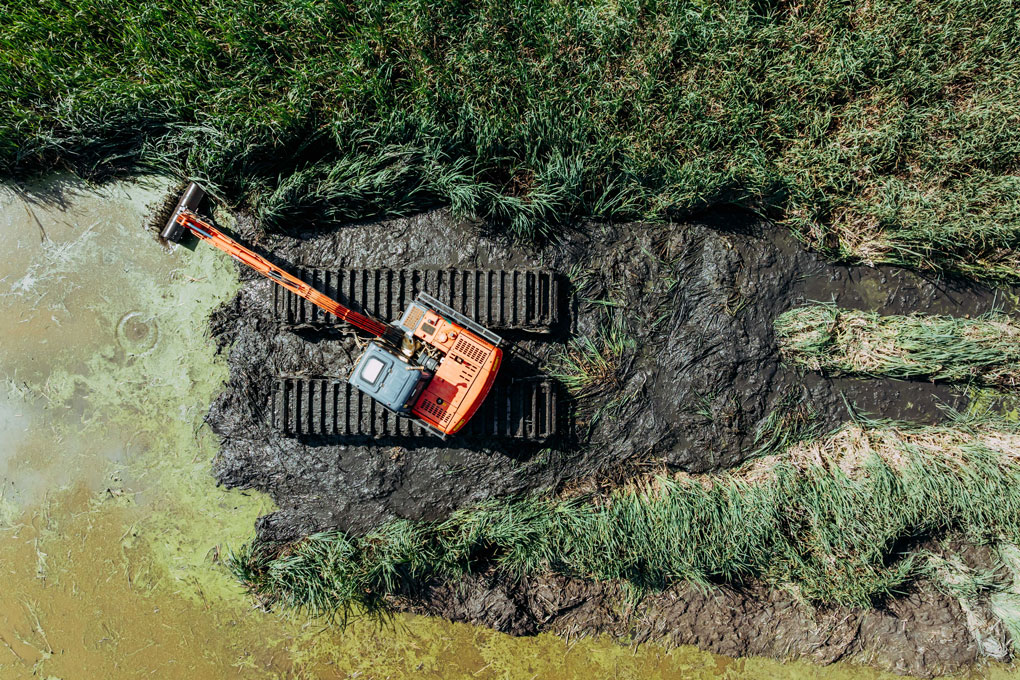
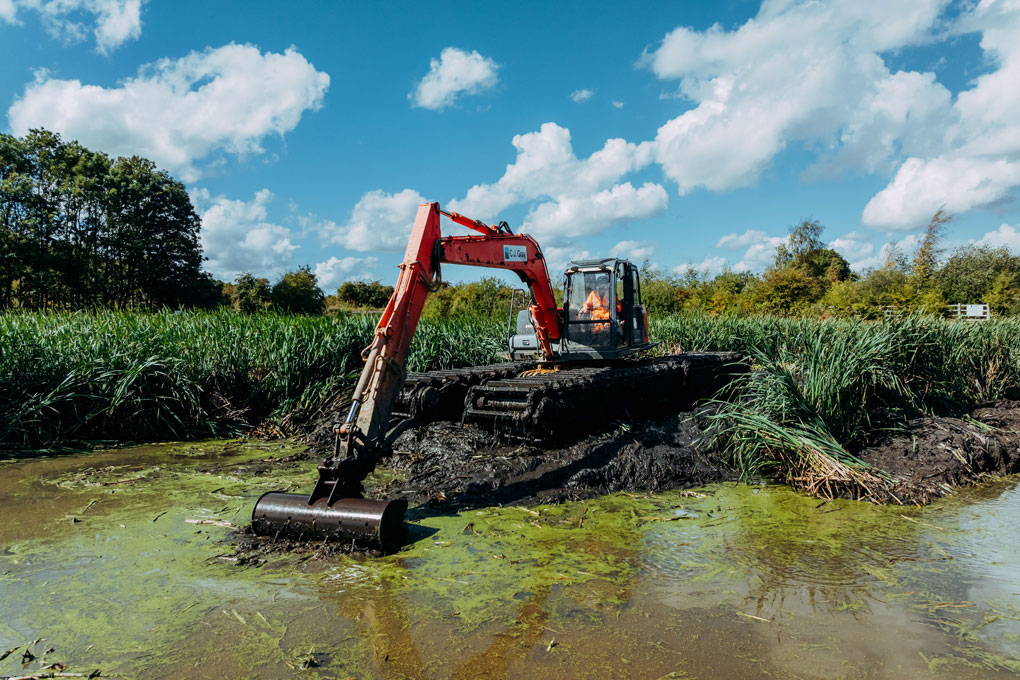

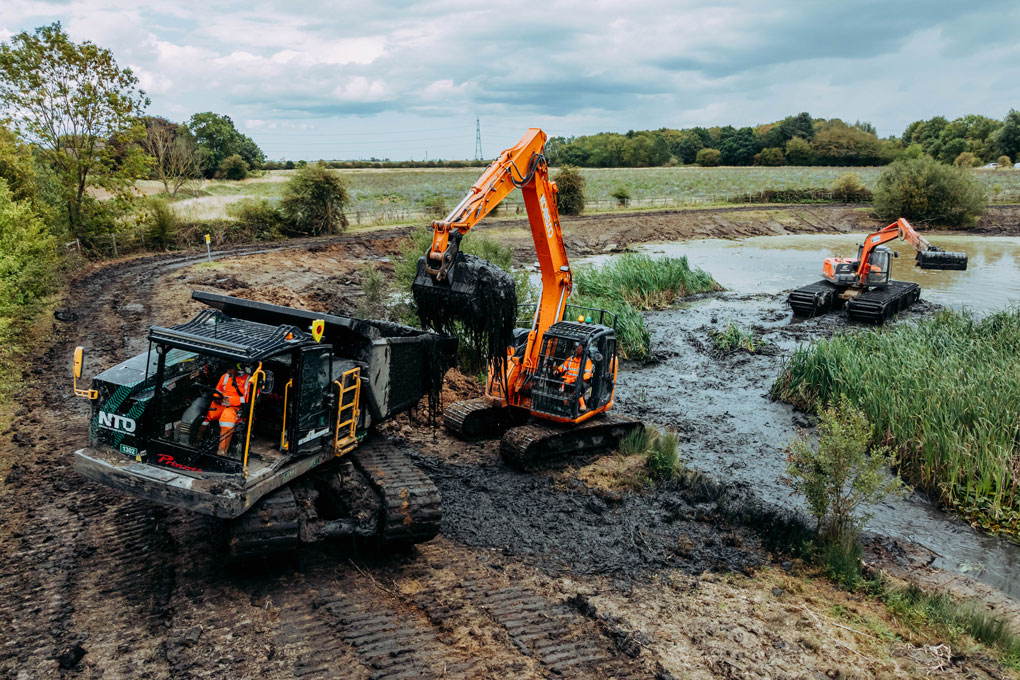
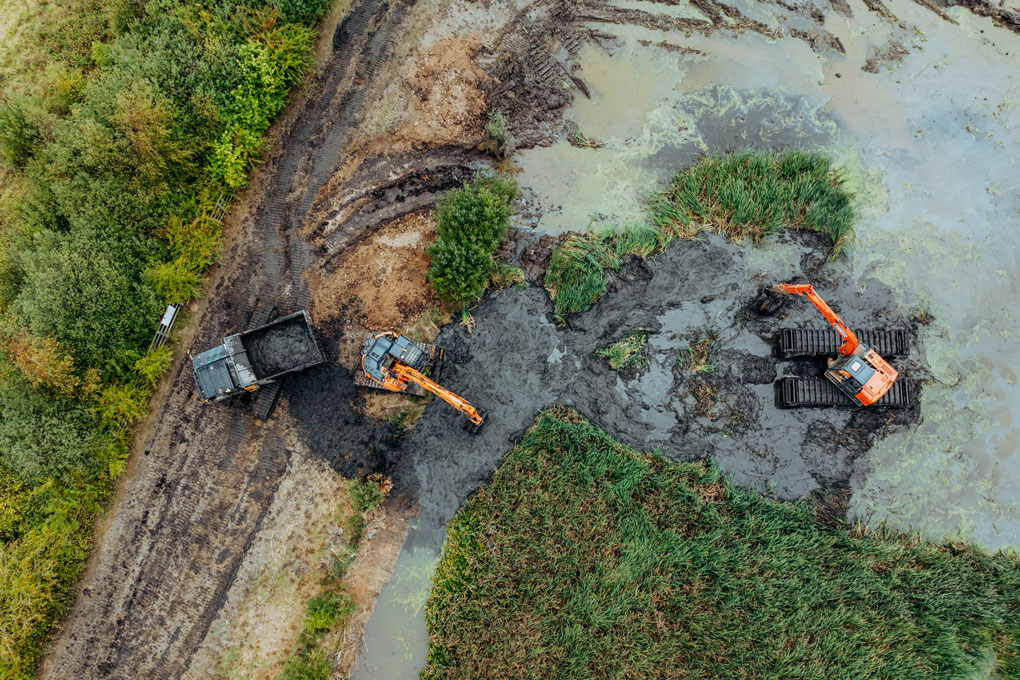
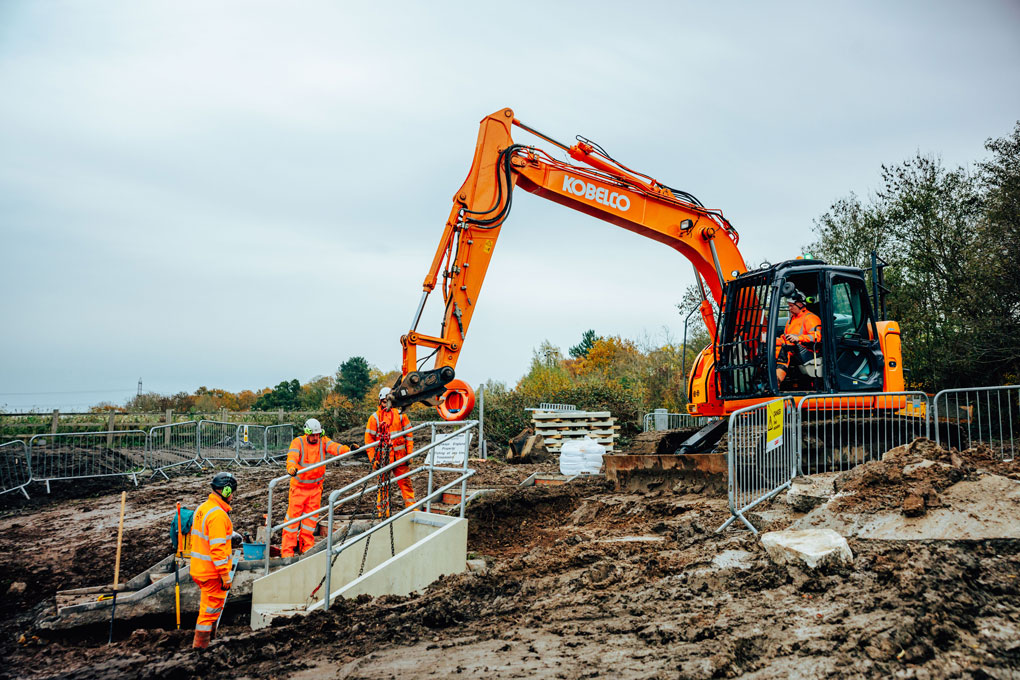
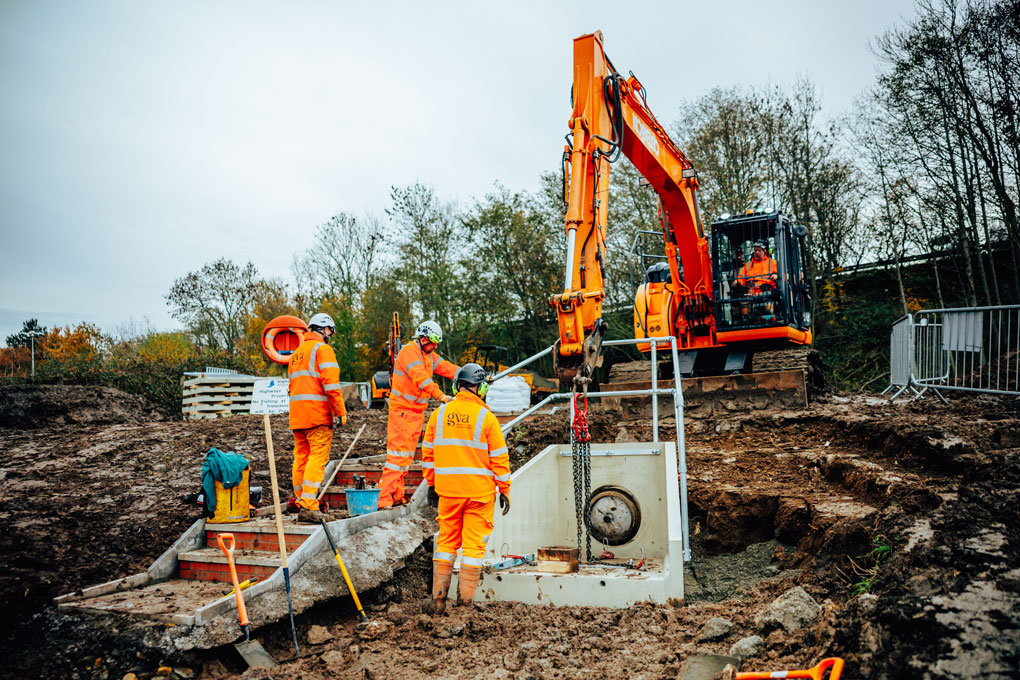
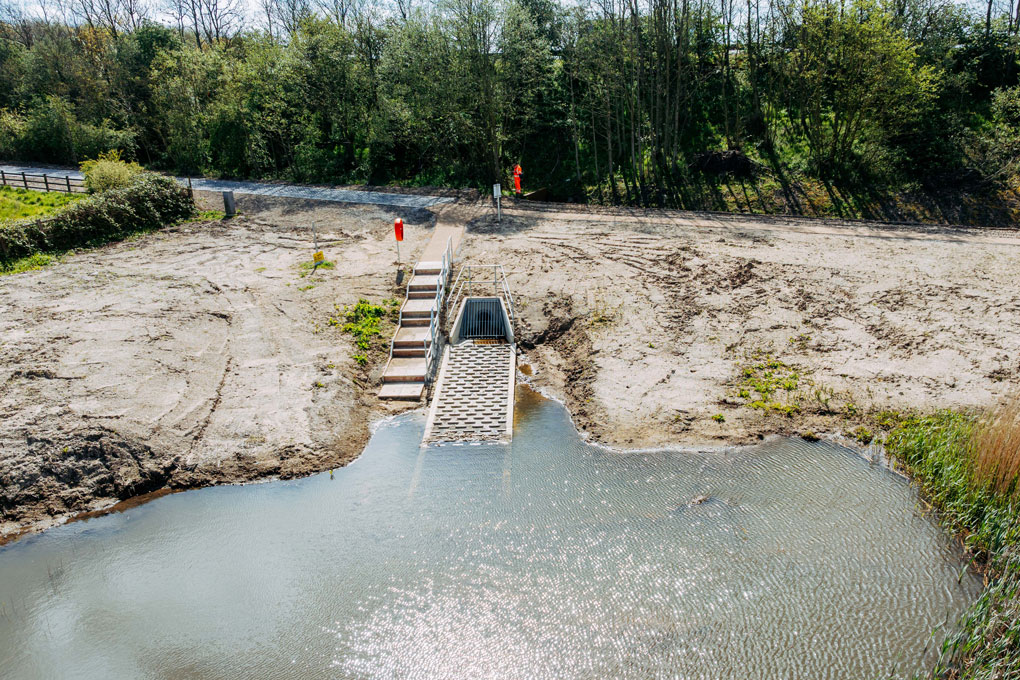
Vegetation clearance was carried out using a clearance crew and a tractor-mounted flail, bringing the overgrown site back to a workable condition before the main pond works began. The team then desilted the pond, cleared reeds to an agreed level, and undertook a programme of civil engineering works including new access steps, drainage improvements, and a new slipway. The damaged pipeline beneath the motorway was also cleared and reinstated, restoring the free flow of water from the eastbound ditch through to the main pond.
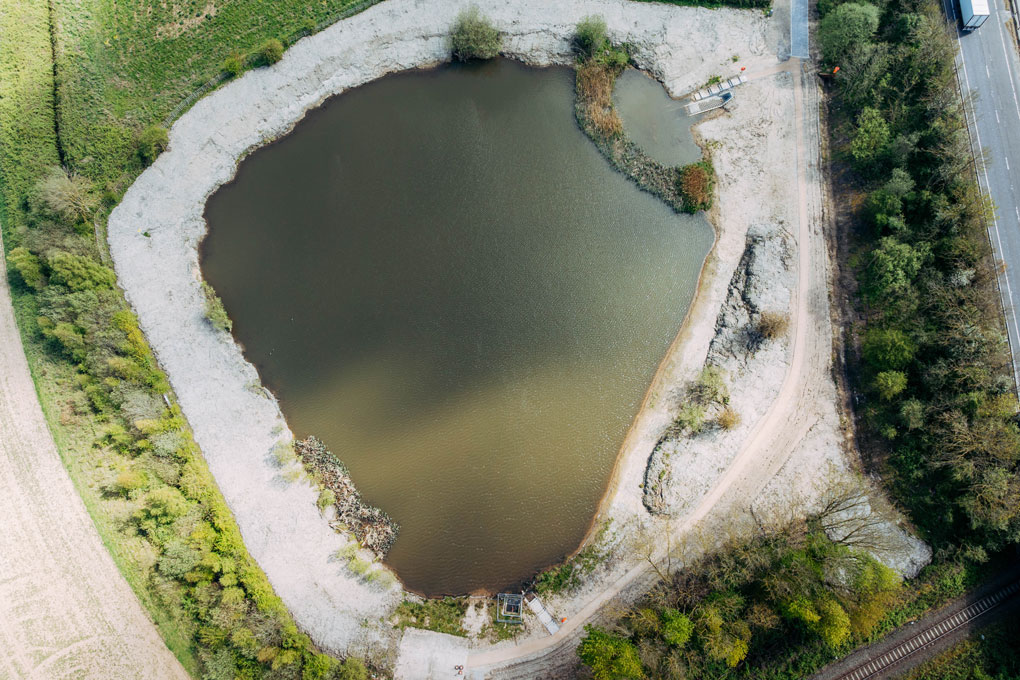
Where possible, all excavated silt was spread around the perimeter of the pond rather than removed from the site — avoiding the need for haulage and reducing the carbon impact of the works. Low-emission HVO (hydrotreated vegetable oil) fuel was used in plant operating within the pond itself, reducing the risk of any hydrocarbon contamination of the water.
Local suppliers were used for materials deliveries wherever practical, and the plant was kept on site between shifts rather than transported to and from GVA’s base each day — reducing unnecessary vehicle movements throughout the project.
Ecology & Sustainability
Working within and around a watercourse requires a considered approach to ecology. GVA ensured that approximately 10–15% of the existing reedbed was retained within the pond to preserve wildlife habitat. A semicircle of reeds was also left around the inlet pipe, acting as a natural filter to intercept motorway runoff before it enters the main body of water.
As a final phase of the project, the surrounding ground is being power-harrowed and reseeded with a carefully selected wildflower and grass mix — an approach chosen specifically for the site’s moisture-retaining conditions. This will help stabilise the pond margins, improve biodiversity, and leave the site in better ecological condition than it was found.



Results & Outcomes
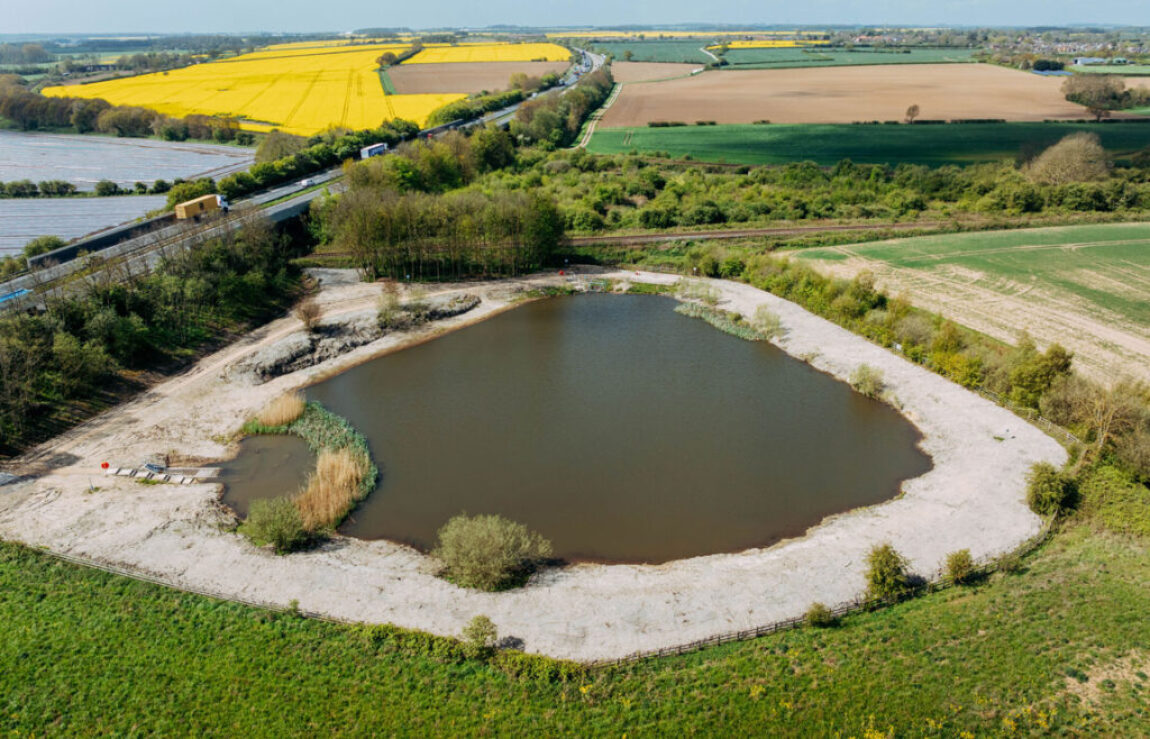
The Rye Hill Balancing Reservoir has been fully restored to operational capacity. The pond can now effectively attenuate surface water runoff from the A180, reducing the risk of flooding downstream and improving highway drainage performance in a known flood hotspot.
Key outcomes include:
- Restored flood attenuation capacity — the pond can once again accept and hold significant volumes of surface water from the motorway
- Reinstated cross-carriageway drainage — the pipeline beneath the motorway has been cleared and reinstated, allowing water to flow freely between the eastbound ditch and the main reservoir
- Improved site access and safety infrastructure — new steps, a slipway, safety fencing, and a grill and ladder on the inlet structure
- Significant material retained on site — hundreds of tonnes of excavated silt were spread around the pond rather than removed, reducing haulage, waste, and associated carbon emissions
- Ecological enhancement underway — reseeding with a site-appropriate mix to improve biodiversity around the pond margins
- Improved habitat for wildlife — opening up the water surface by clearing excess reeds has created greater space for fish and birds, increasing the ecological value of the pond
The project was well received by National Highways, with senior representatives from the client citing it as a leading example of pond restoration — and highlighting GVA’s professionalism, methods, and access to specialist equipment throughout. The relationship has since led to further drainage and pond works for the same client.

