Summary
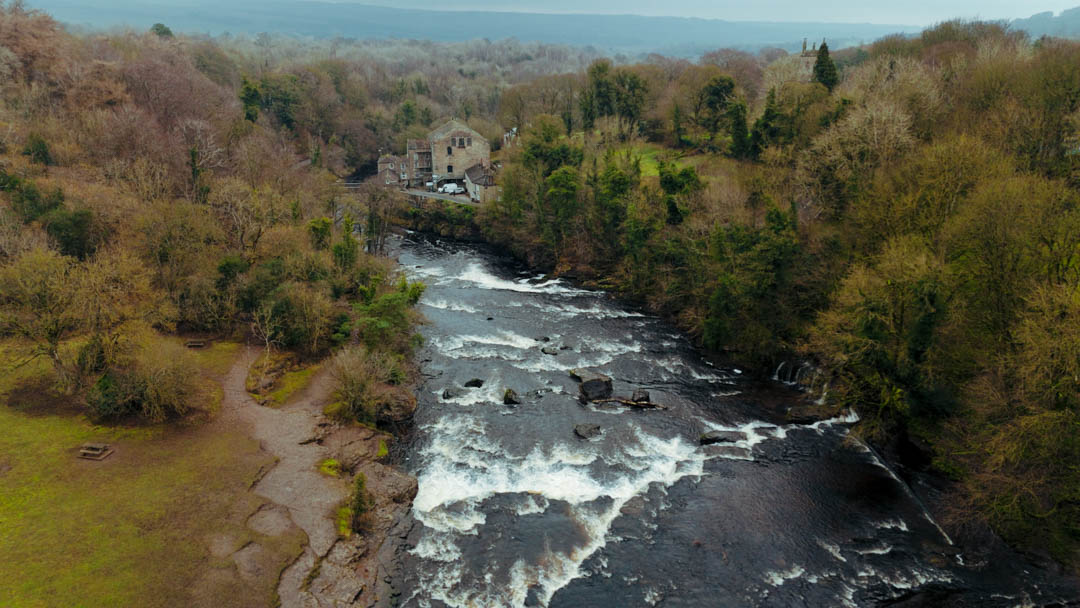
Yorkshire Dales National Park – Mechanised felling, ecological integration and habitat creation
- Client: Yorkshire Dales National Park Authority
- Location: Aysgarth Falls, North Yorkshire
- Duration: 7–8 shifts over 2 weeks
- Services: Arboriculture, Ecology
Background & Challenge
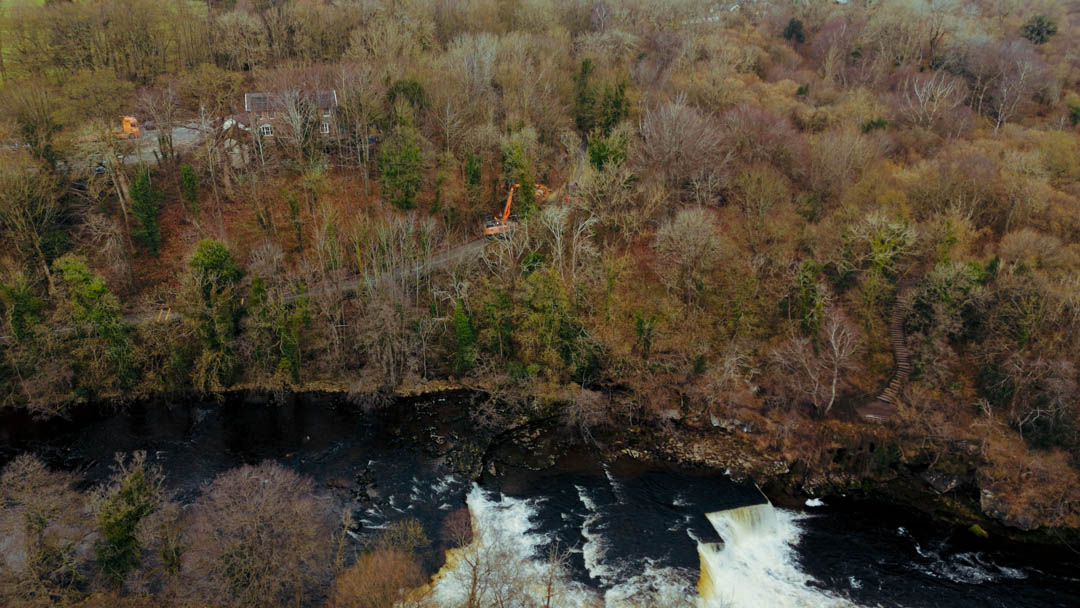
The Yorkshire Dales National Park Authority (YDNPA) instructed independent arboricultural consultants Treeplan to survey significant trees across their properties in summer 2025. At Aysgarth Falls car park and Freeholders Wood, the inspection identified several ash trees — ranging from 8 to 20 metres — affected by Hymenoscyphus fraxineus (ash dieback disease), dead, or in serious structural decline. Originally classified as medium priority, the condition of these trees deteriorated significantly due to inclement weather over the following months, escalating them to urgent priority and requiring emergency removal.
In February 2026, a Ground Level Tree Assessment (GLTA) for bat roosting suitability was commissioned and carried out by licensed bat ecologist Victoria Handby (MSc, ACIEEM). Nine trees were assessed across the car park and Freeholders Wood. Of these, five were classified as PRF-I (potential roosting features suitable for individual bats), three were negligible, and one — a 20-metre ash adjacent to the visitor centre — required further assessment due to its proximity to known Brandt’s and soprano pipistrelle maternity roosts within the building, and the impossibility of a full ground-level or aerial inspection. No bat roost licence was required; works on the PRF-I trees proceeded under a Precautionary Working Method Statement (PWMS) including a pre-works check, in line with Bat Conservation Trust guidance.
A previous contractor had withdrawn from the project due to the hazardous condition of the trees — several were unsafe to climb, obscured by dense ivy, and situated adjacent to the public highway and visitor infrastructure — leaving the National Park with an urgent public safety obligation and no straightforward delivery route.
Programme & Planning
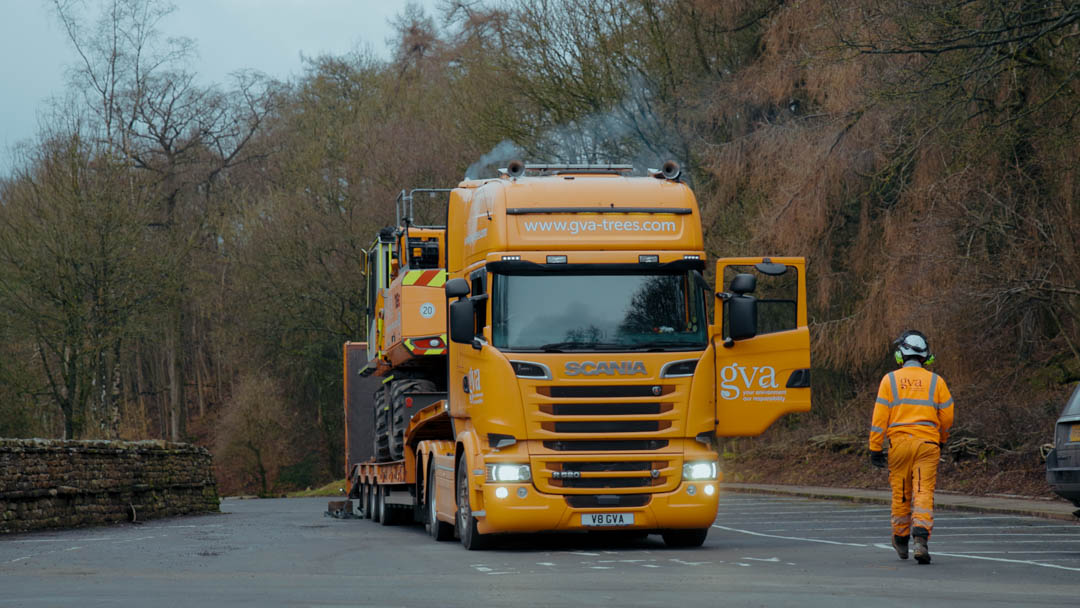
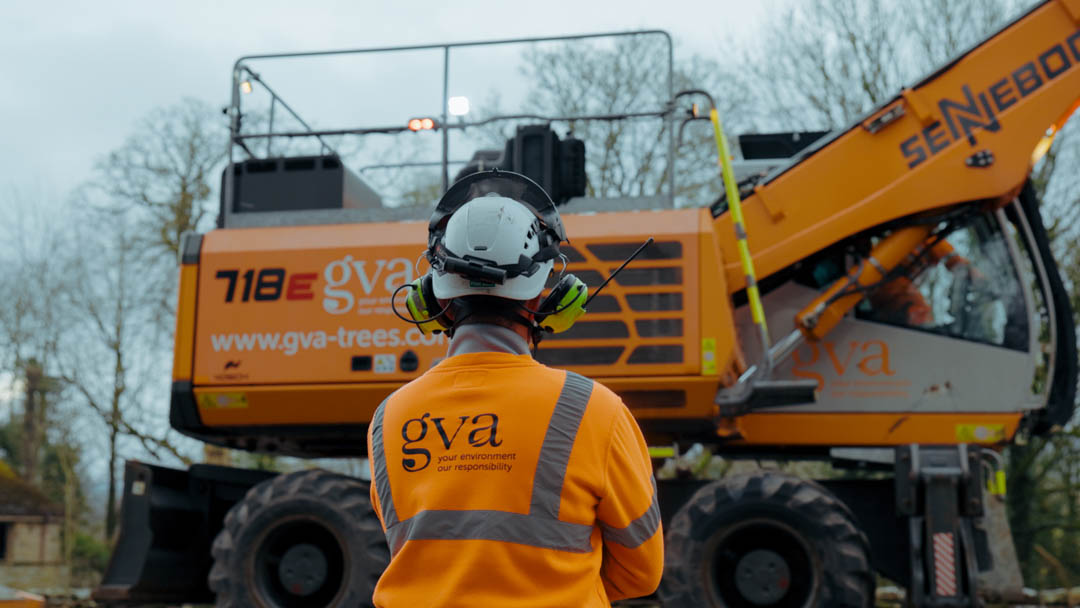
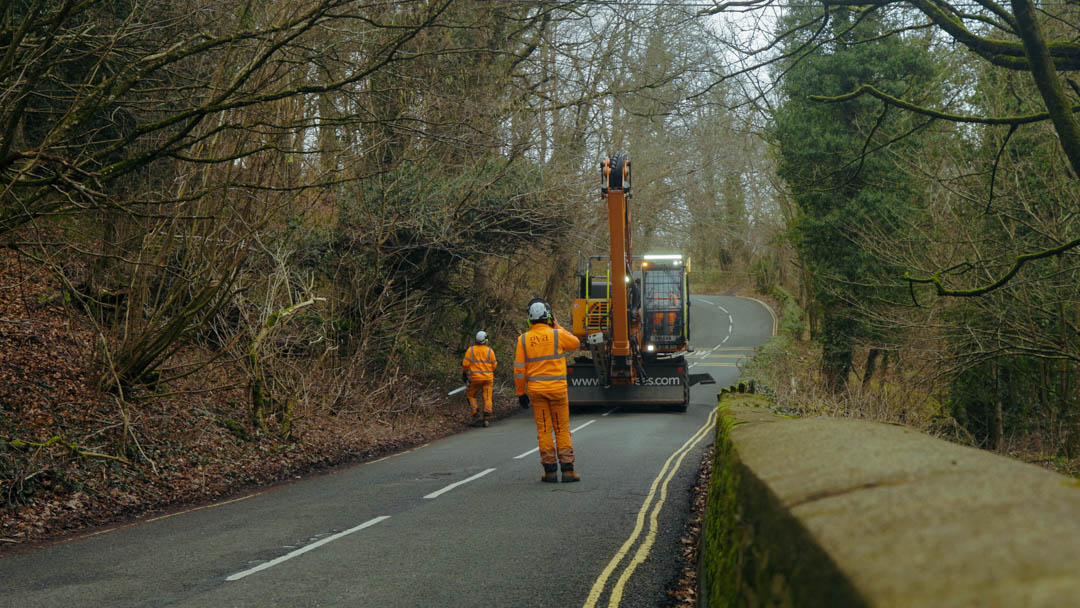
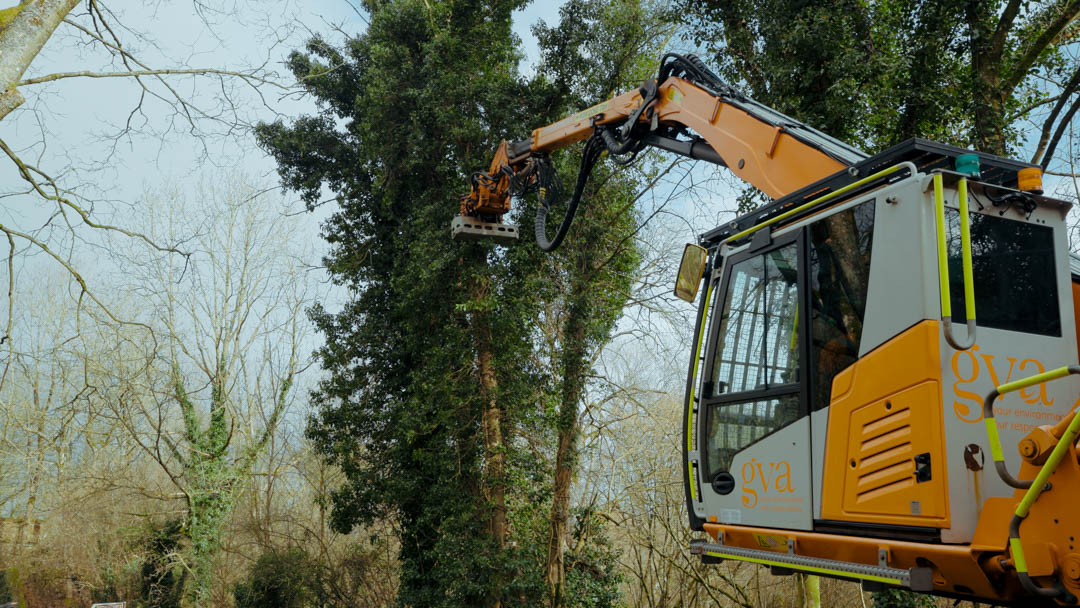
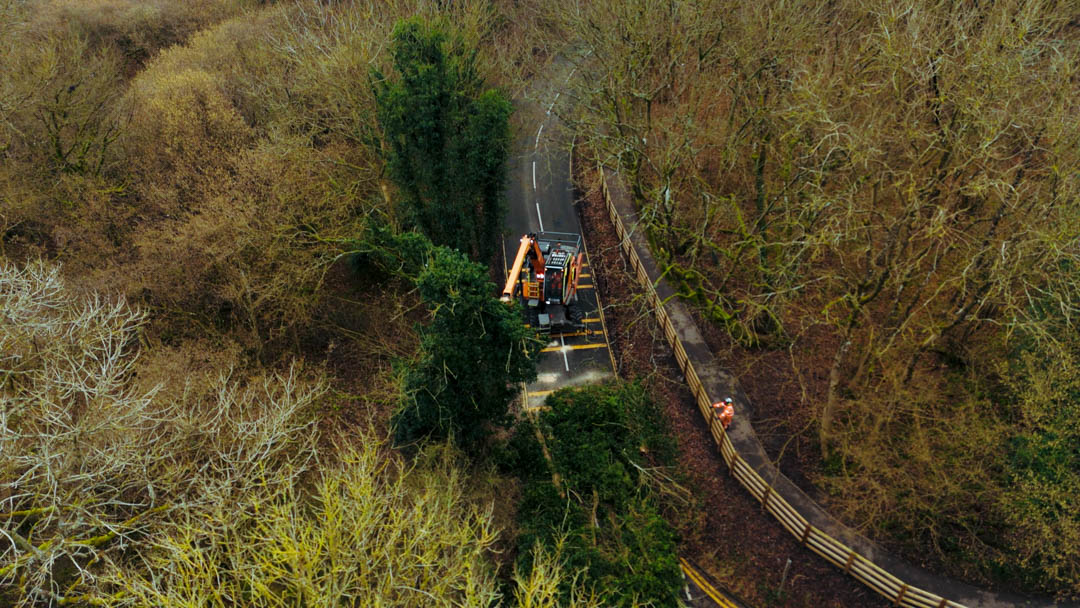
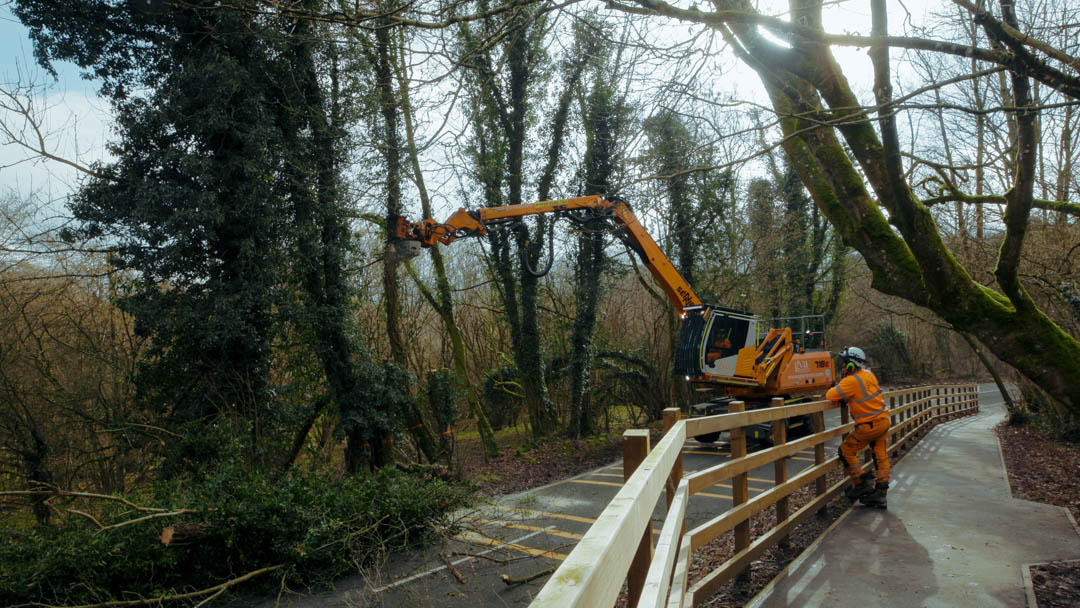
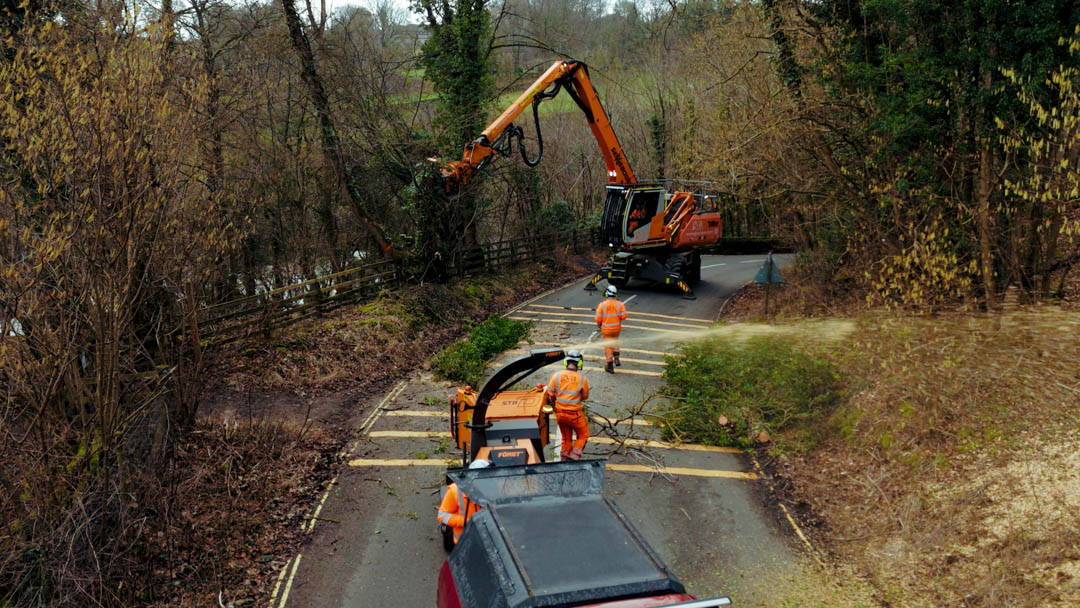
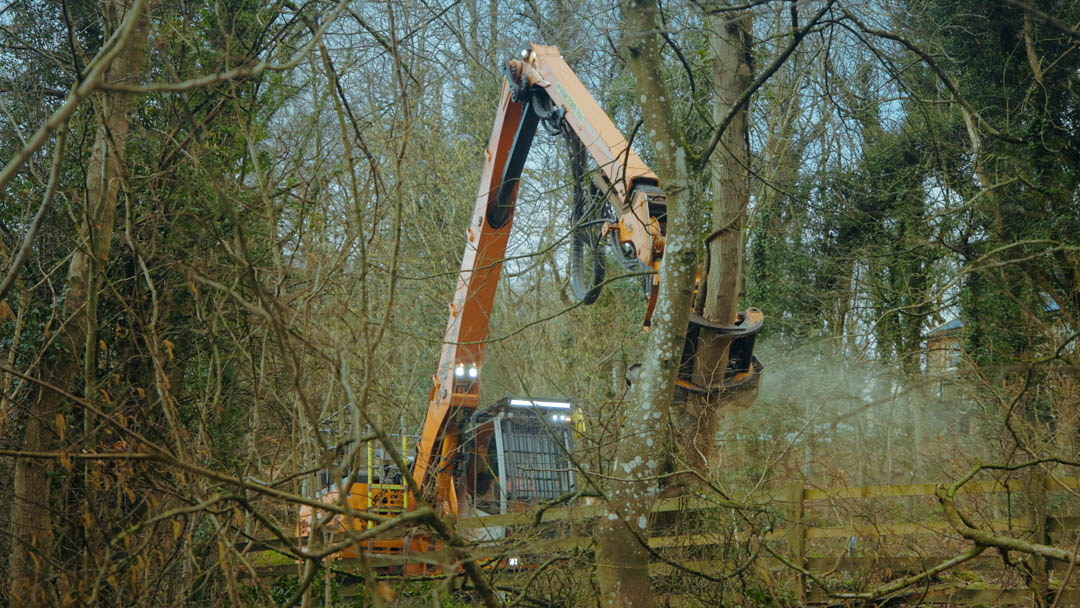
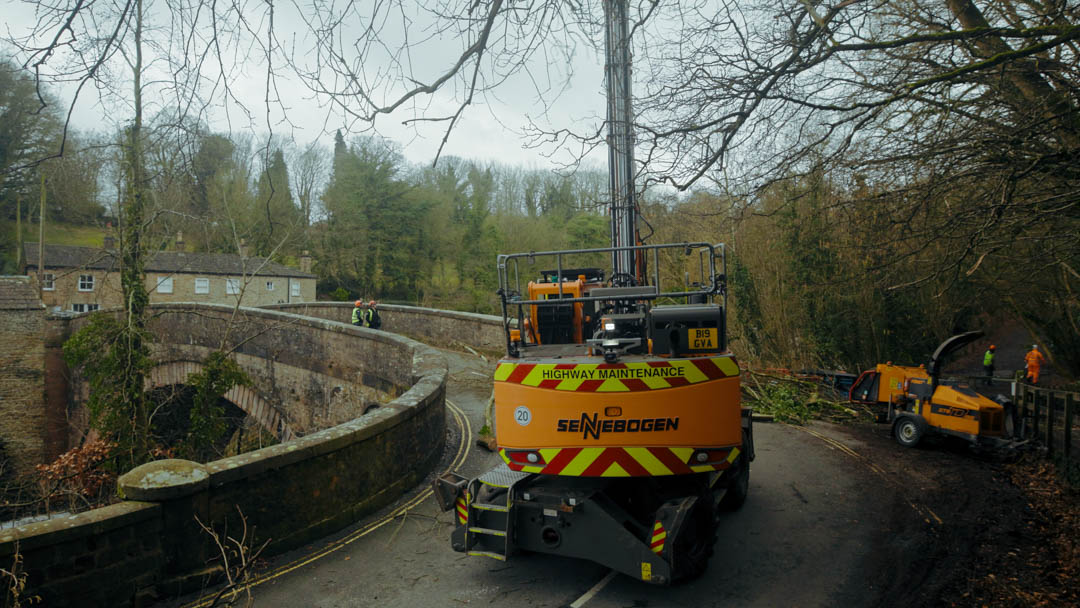
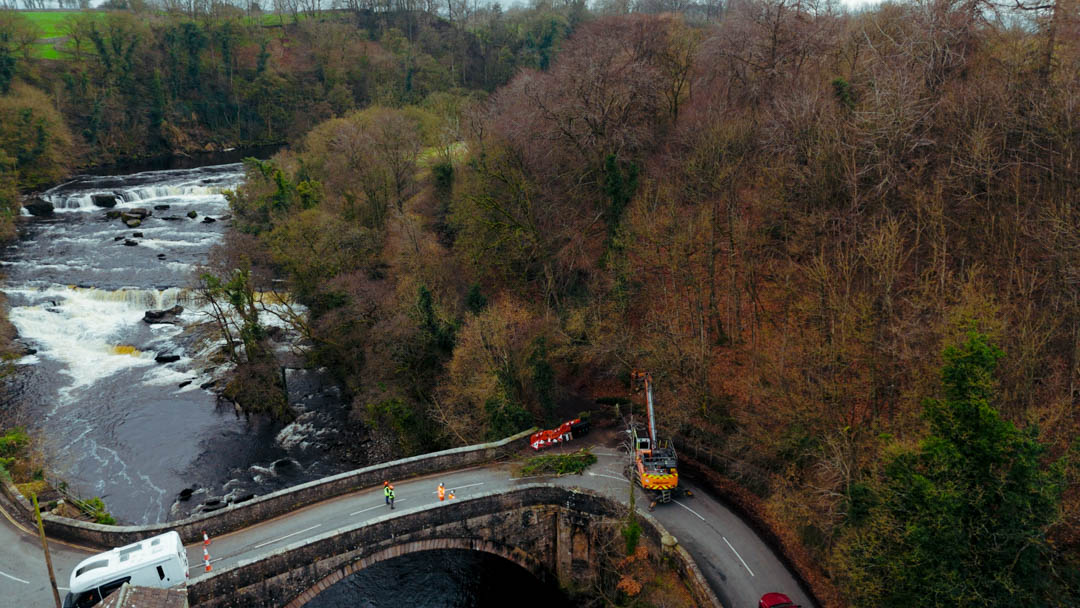
GVA were appointed to deliver a mechanised solution across two distinct locations: the roadside trees at Ballowfield and the Aysgarth Falls car park and Freeholders Wood. Works were delivered across seven to eight shifts over two weeks, structured around the ecological survey requirements, PWMS protocols, and team availability.
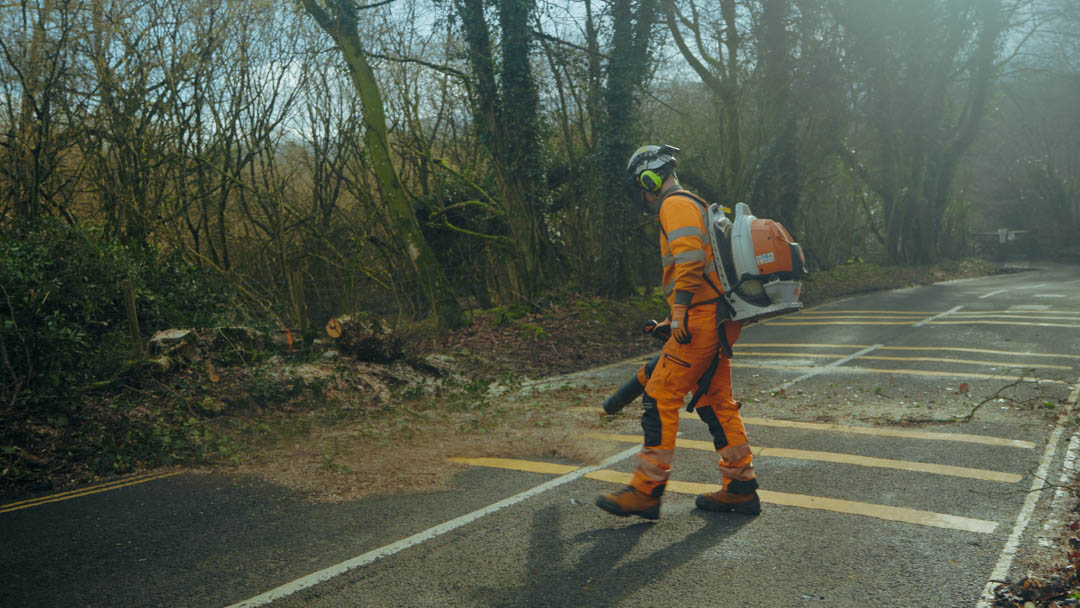
A team of between three and five operatives was deployed, depending on the phase of work. Road closures at Ballowfield operated between 08:00 and 14:30 — with an approximately five-mile diversion in place for the duration — making swift, incident-free delivery within the window essential. At the Yorkshire Dales National Park car park, a single day of traffic management was put in place. A designated operational area was established to maintain visitor access throughout. Works across all locations were completed ahead of the closure deadline.




Ecological oversight
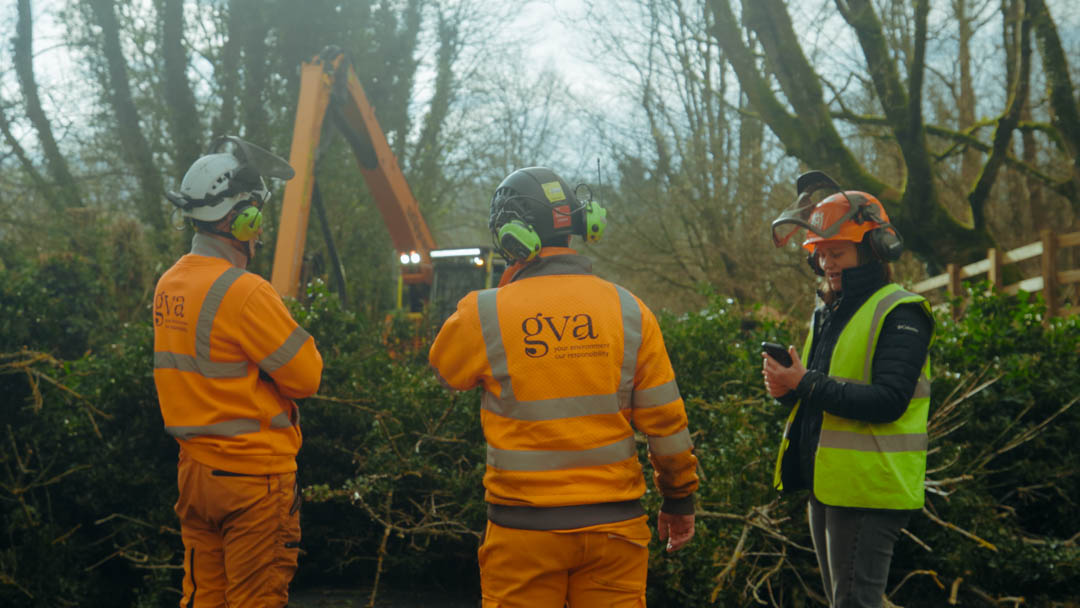
Before and during felling, GVA worked in close collaboration with the National Park Tree Officer and the appointed bat ecologist acting as Ecological Clerk of Works (ECoW). In line with the PWMS, a pre-start toolbox talk on bat awareness was delivered to all operatives on site. Checks of all PRF-I trees were carried out before works commenced on each specimen.
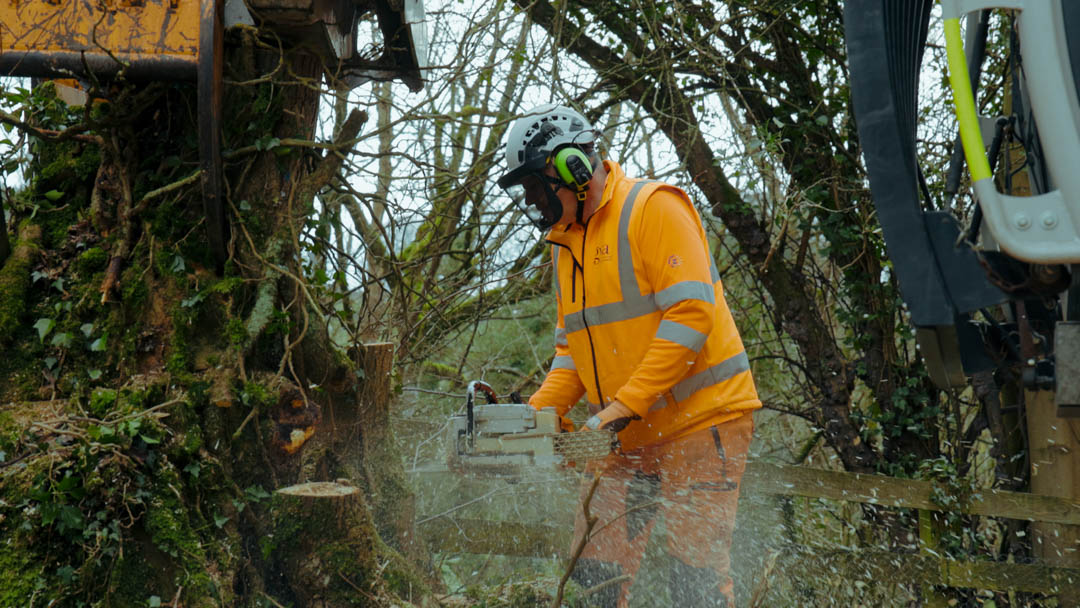
A slow, controlled soft-felling methodology was adopted on all PRF-I trees, with each limb removed section by section and visually inspected before the next cut was made. No bat roosts were identified across the programme, allowing works to proceed without interruption or the need for Natural England intervention. The ecologist confirmed the absence of bats and supervised the full operation on site.
Specialist works — Café & Visitor Centre
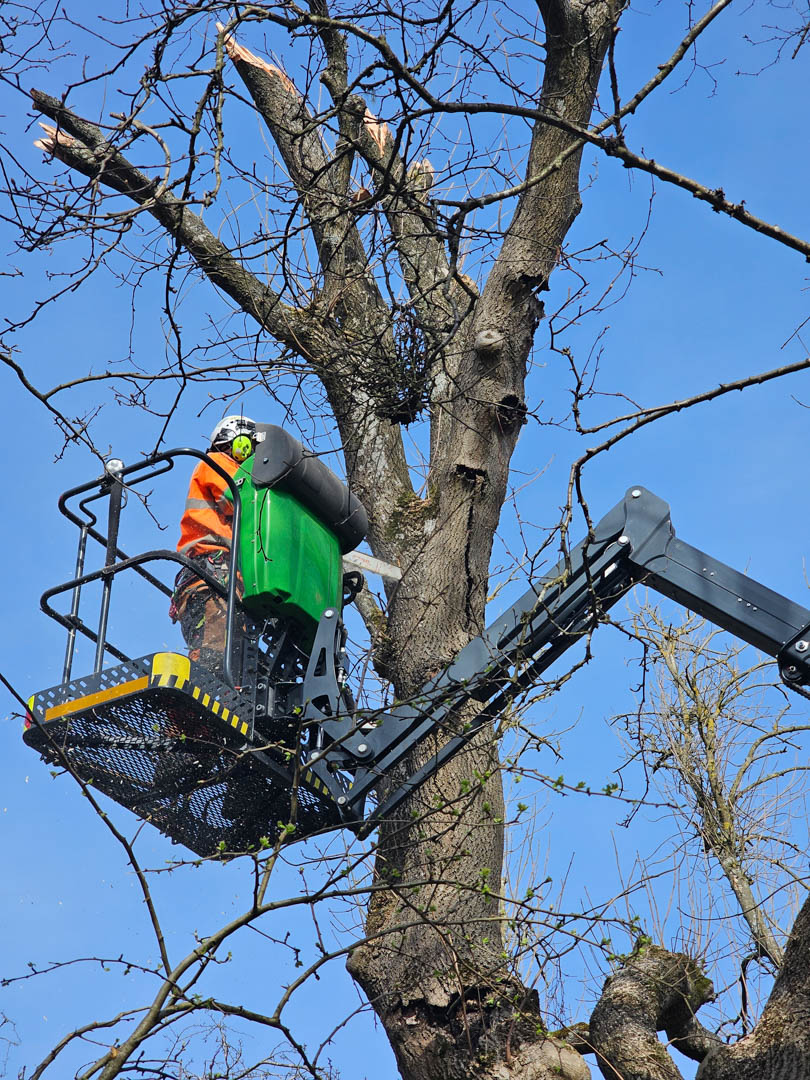
The large ash (T1) adjacent to the café and visitor centre — a 20-metre specimen with a 60cm diameter stem — presented the most complex challenge on site. With its canopy overhanging buildings and power cables, ground conditions preventing standard equipment access, and its proximity to a known maternity bat roost, the tree required detailed individual planning. A tracked 22-metre MEWP was selected for its ability to traverse difficult terrain and position safely within the constrained footprint.
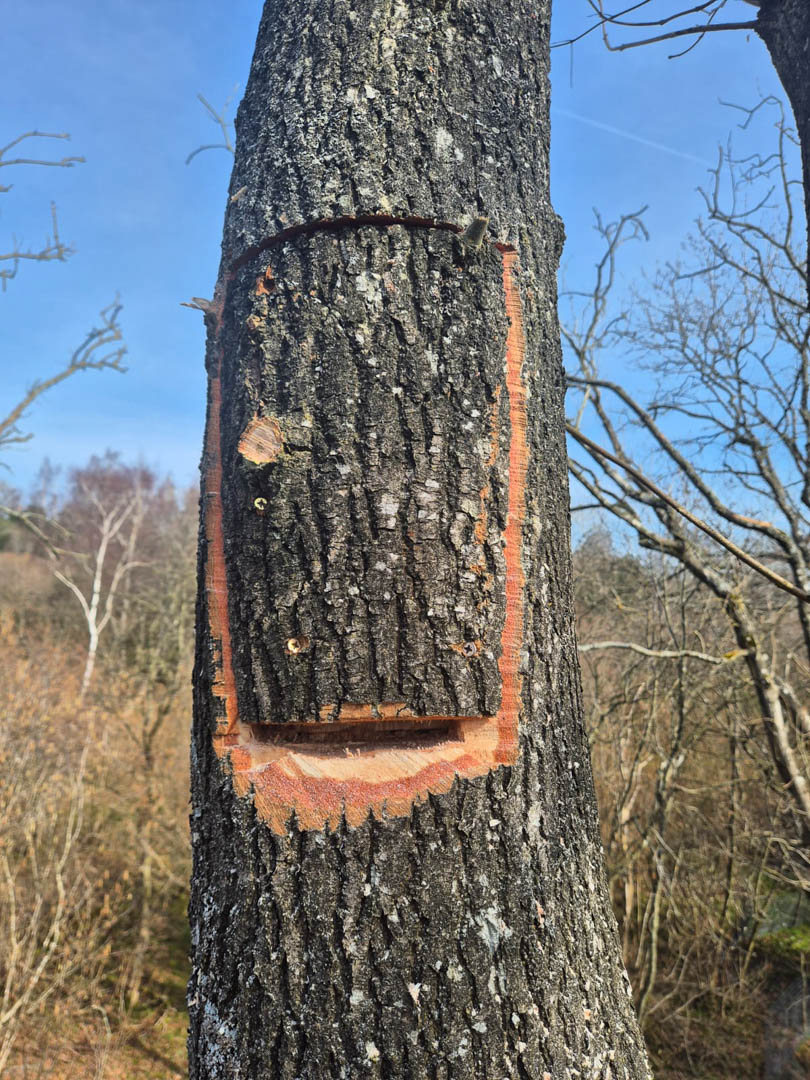
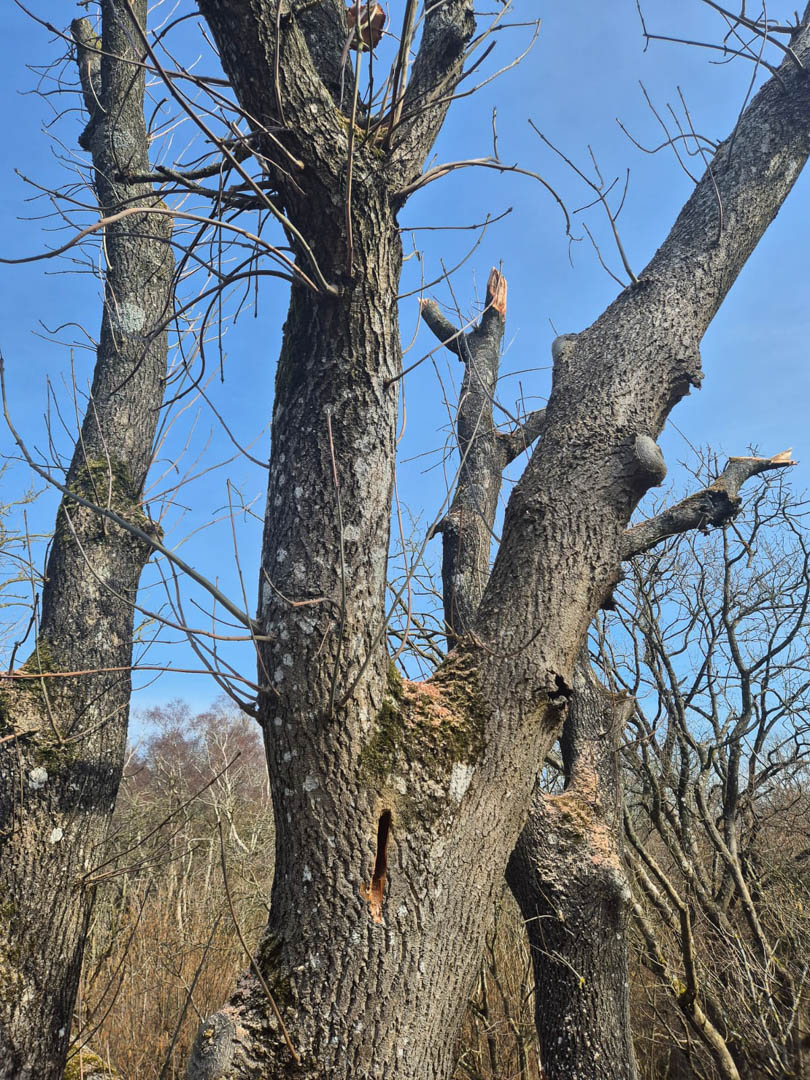
Crown removal was carried out systematically, with timber rigged and dismantled in a controlled sequence to avoid contact with the structures below. Felled logs were retained and stacked on site to create deadwood habitat, and brash was processed in accordance with YDNPA requirements. Two to three stems which contained bat suitable habitat were retained at a safe height, with limbs coronet cut to replicate natural fracture points — a technique that promotes fungal colonisation, invertebrate activity, and longer-term biodiversity benefit. Additional bat habitat features were created through plunge cutting, forming natural cavities within the retained sections.